

Finding the Best Home Decisions for Your Aging Parents
A Thoughtful Guide to Aging in Place, Downsizing, Senior Living, and Choosing What Comes Next

There is a moment many adult children eventually experience.
Maybe you notice that Mom has stopped using the upstairs bedrooms.
Maybe Dad mentions that the yard is becoming “a lot to keep up with.”
Maybe the refrigerator is emptier than usual, a few bills have gone unpaid, or a fall that “wasn't a big deal” suddenly feels like a very big deal.
Maybe nothing dramatic has happened at all.
Your parents are simply getting older, and the house that fit them beautifully for the last 30 years may not fit quite as beautifully for the next 10.
That realization can bring up almost everything at once:
Love
Worry
Guilt
Resistance
Finances
Logistics
Family dynamics
One enormous question:
What is the best living situation for Mom and Dad now…
and what might be best a few years from now?
There is no universal answer.
For one family, the right decision may be staying exactly where they are and making thoughtful modifications to the home.
For another, it may be downsizing to a smaller house or condominium near family.
Some parents may love the freedom and social opportunities of an independent-living community.
Others may eventually benefit from assisted living, memory care or a setting that provides more comprehensive support.
The goal is NOT to find the place that sounds the most impressive.
It is to find the environment where your parent can be safe, connected, respected, appropriately supported and able to enjoy life.
Ideally, you begin exploring the possibilities before a crisis makes the decision for you.
At A Better Tripp Moving & Storage, we have helped families through many kinds of moves, and senior moves are often among the most personal.
This move is rarely simply about furniture. It can represent decades of memories, independence, family traditions and identity.
Before anyone starts packing a single box, start with something much more important: A conversation.
First, Change the Question
Families sometimes begin with: “Does Mom need assisted living?”
That can immediately make the conversation feel threatening.
Try beginning somewhere else.
ASK: “What would make life easier for Mom right now?”
That single change opens far more possibilities.
Maybe…the answer is help with housekeeping.
Maybe…it is transportation.
Maybe…it is installing grab bars and improving lighting.
Maybe…it is finding a one-story home closer to family.
Maybe…loneliness—not physical health—is becoming the biggest concern.
Maybe…medications have become difficult to manage.
Maybe…Dad is doing fine physically but is exhausted from caring for Mom.
Maybe…the house itself has become the problem.
Before choosing a housing category, understand the actual NEEDS.
That keeps the conversation focused on improving someone's life rather than simply moving someone out of their home.
Planning a Move for an Aging Parent?
Senior moves deserve extra patience and planning.
Whether your parent is downsizing, transitioning to a senior-living community or moving closer to family, our experienced team can help make the transition easier.



Option 1: Aging in Place
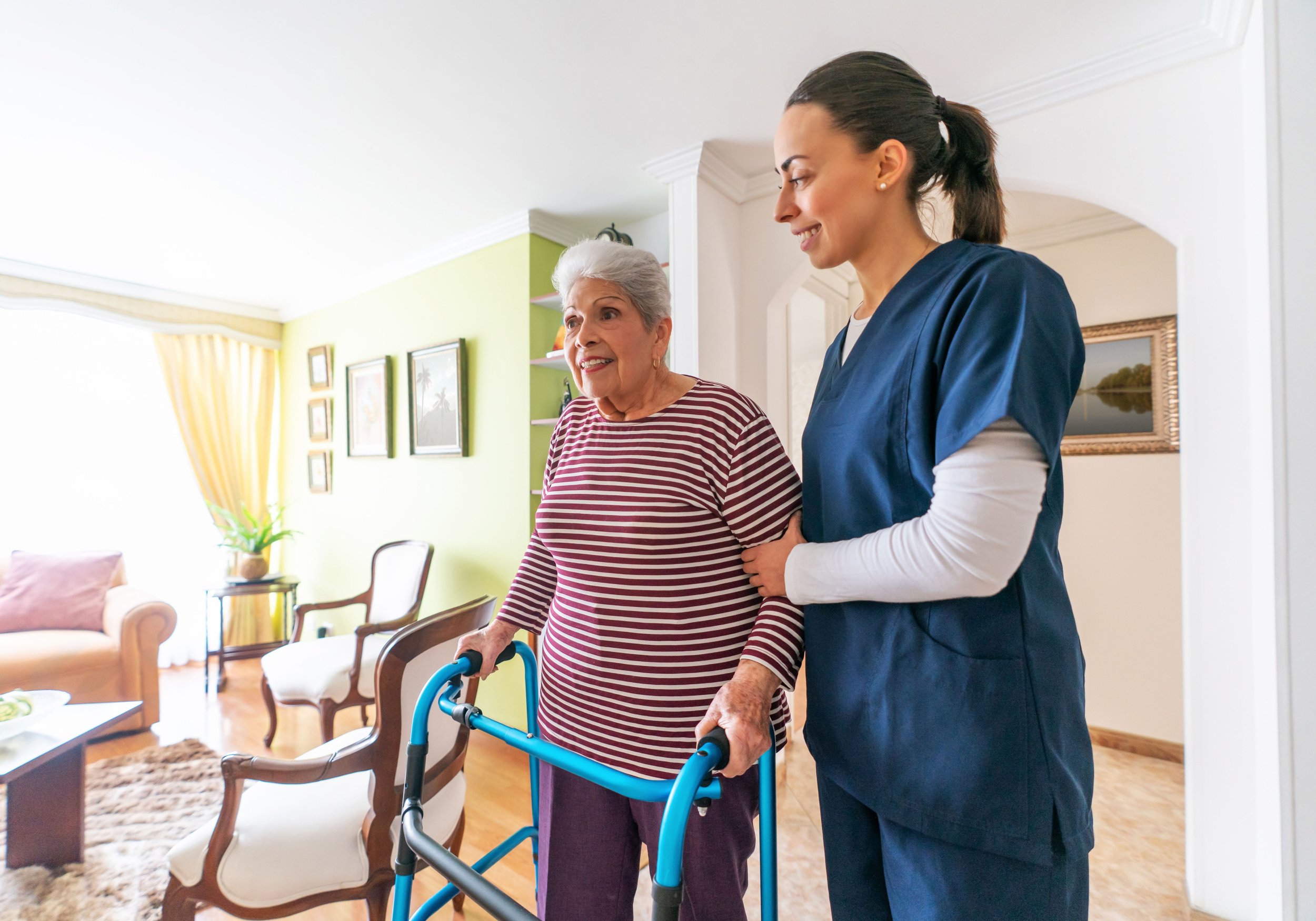
For many older adults, the first choice is also the most emotionally comfortable: Stay home.
That desire is very common. AARP reported in 2026 that about three-quarters of adults age 50 and older want to remain in their homes as they age.
There are good reasons.
Home is familiar.
Neighbors are familiar.
The grocery store is familiar.
The chair by the window is familiar.
The garden, church, friends, photographs and routines all carry a sense of continuity that becomes increasingly valuable with age.
The important question is NOT simply:
“Can Mom stay home?”
It is:
“Can Mom continue living here safely and comfortably,
and what support would make that possible?”
Look at the Home With Fresh Eyes
Walk through the property, as if you were seeing it for the first time.
Look at:
Stairs
Bathrooms
Lighting
Flooring
Doorways
Outdoor steps
Long hallways
Clutter
Laundry access
The distance between the bedroom and bathroom
The height of cabinets
The bathtub
The driveway
The yard
Even small things can become significant over time.
AARP's aging-in-place guidance recommends considering improvements such as walk-in showers, grab bars, better lighting, first-floor sleeping arrangements, reduced trip hazards, easier-to-use hardware and accessible entryways.
That does not mean turning the house into a hospital.
Many modifications can be attractive and subtle.
iA beautifully designed walk-in shower can be safer and more luxurious.
Decorative grab bars can resemble towel bars.
Lever door handles can replace difficult knobs.
Motion-actvated lighting can feel like a smart-home upgrade rather than an accessibility feature.
Sometimes, a few thoughtful changes can add years of comfortable independence.
Aging in Place Works Best When the Support System Works Too
The house may be perfectly safe, but what about everyday life?
ASK:
Who handles groceries?
Who drives to appointments?
Who notices if something changes?
Who helps if the air conditioner stops working?
Who handles medications?
Who provides companionship?
Who comes if there is an emergency at 2:00 a.m.?
Who is doing the caregiving, and is that person becoming overwhelmed?
Sometimes, the challenge is not the house. It is the infrastructure surrounding the person.
That is where services such as home-care assistance, meal delivery, transportation, housekeeping, lawn care, home-health services when medically appropriate, adult-day programs and caregiver support may make staying home more realistic.
In the Houston area, the Harris County Area Agency on Aging provides resources for adults 60 and older and their caregivers, including benefits counseling, caregiver support, referrals, health-promotion services and access to long-term-care ombudsman resources.



Option 2: Downsizing to a Smaller Home
Sometimes, the answer is not “stay here” or “move into senior living.”
There is a very important middle option:
Move into a home that better fits this stage of life.
That might mean:
A one-story house.
A condominium.
A patio home.
A smaller townhouse with an elevator.
A 55+ community.
A home closer to children or grandchildren.
A lock-and-leave property with less maintenance.
A smaller home near doctors, shopping and social activities.
Downsizing can preserve independence while eliminating the parts of homeownership that have become exhausting.
This can be particularly appealing for healthy, active older adults who simply no longer want to maintain:
Four bedrooms
Three bathrooms
A swimming pool
A large yard
A second floor
Thirty years of accumulated possessions
The mysterious cabinet filled entirely with plastic containers whose lids disappeared sometime around 2007
Think Lifestyle, Not Just Square Footage
A smaller home should not simply be “smaller.” It should make daily life better.
Look for:
Single-level living
Minimal steps
Wide hallways
Accessible bathrooms
Good lighting
Manageable outdoor areas
Convenient parking
Nearby grocery stores
Healthcare access
Restaurants
Walking opportunities
Friends
Church or community connections
If your parent still drives, consider how comfortable the surrounding roads feel.
NOTE: Houston geography matters.
A beautiful home may lose much of its appeal if every doctor's appointment requires navigating a complicated 45-minute freeway drive.



Option 3: Independent Living
Independent-living communities can be a wonderful fit for older adults who remain largely self-sufficient, but want fewer household responsibilities and more built-in connection.
This category is sometimes misunderstood. People hear “senior living” and picture nursing care.
Independent living can feel much more like an apartment community, resort or residential club designed specifically for older adults.
Depending on the community, residents may have access to:
Dining
Housekeeping
Transportation
Fitness programs
Pools
Libraries
Social events
Classes
Trips
Game nights
Happy hours
Walking clubs
Movie nights
Religious services
Salon services
Concierge support
Perhaps the most underrated benefit: People nearby
For an older adult living alone, social isolation can gradually become a larger concern than almost anything happening physically.
Independent living can introduce daily opportunities for connection without requiring someone to surrender independence.
Ask the Social Question
During tours, families naturally focus on the apartment. Do not forget to focus on the life happening outside it.
ASK:
What happens here at 10:00 on Tuesday morning?
What about Friday evening?
Do residents actually attend activities?
Are people sitting together?
Are they talking?
Does the dining room feel lively?
Is there transportation to local events?
Are there clubs that match your parent's interests?
Can residents start their own groups?
Your mother may not care that the lobby has a spectacular chandelier.
She may care enormously that six women meet every Thursday to play Bridge.
That is the difference between evaluating real estate and evaluating life.
Explore More Home and Lifestyle Inspiration in the Move Houston Magazine.


Option 4: Assisted Living
Assisted living becomes appropriate when…
someone still wants significant independence,
but needs regular support with daily activities.
That might include help with:
Bathing
Dressing
Medication management
Mobility
Meals
Personal grooming
Toileting
Getting safely to activities
In Texas, assisted-living facilities are licensed through the state, and facilities are categorized partly according to residents' ability to evacuate independently and whether nighttime assistance is required. Texas HHSC describes Type A and Type B assisted-living facilities differently based on residents' support and evacuation needs.
For families, the important takeaway is simple: “Assisted living” is not one standardized experience.
Different communities offer different levels of support.
That is why families should evaluate both the environment and the care model.
Look Beyond the Beautiful Lobby
Senior-living communities understand first impressions.
There may be:
Fresh flowers
A grand piano
Beautiful art
An impressive dining room
A gorgeous courtyard
Those things matter, but they are not enough. Ask what happens AFTER the tour ends.
How many caregivers are typically available?
How are care needs assessed?
How does pricing change as someone's care level increases?
How are medications managed?
What happens after a fall?
How do staff respond if a resident's abilities change?
Can someone remain in the community as needs increase?
What circumstances would require a resident to move?
How often are care plans reviewed?
How does the community communicate with adult children?
That information is often far more important than the granite countertops.



Option 5: Memory Care
Memory care is designed for people living with Alzheimer's disease, dementia and other forms of cognitive impairment who require a more specialized environment.
For families, this transition can be particularly emotional.
A parent may still appear physically healthy.
They may remember old stories perfectly.
They may insist nothing is wrong.
Meanwhile, adult children may be quietly noticing:
Repeated questions
Getting lost while driving
Missed medications
Unpaid bills
Food left on the stove
Changes in judgment
Wandering
Increasing confusion
Unusual anxiety
Declining personal hygiene
Memory care communities generally offer greater structure, supervision and specialized
programming than traditional independent or assisted living.
The environment itself becomes important, because cognitive changes can affect balance, judgment, navigation and the ability to respond to emergencies.
AARP notes that dementia can influence memory, coordination, depth perception and decision-making, making home-safety planning particularly important.
If cognitive concerns are emerging, involve your parent's healthcare team rather than trying to determine the appropriate level of care entirely on your own.



Option 6: Moving in With Family
Sometimes. the best solution is closer than anyone expected.
Mom moves into your home.
Dad moves into your sister's guest suite.
Your parents relocate closer to one of their children.
A garage apartment becomes an accessible suite.
An addition becomes an aging-parent apartment.
For some families, multigenerational living can be incredibly rewarding.
Grandchildren gain more time with grandparents.
Older parents remain connected.
Families share responsibilities.
Expenses may be reduced.
This decision deserves careful thought. Love does not automatically create a workable caregiving system.
Discuss:
Privacy
Bathrooms
Transportation
Meals
Caregiving responsibilities
Work schedules
Finances
Household rules
Respite
Home modifications
Future health needs
How responsibilities will be divided between siblings
The goal is to create a family arrangement that is sustainable…
not one where a single adult child silently absorbs every responsibility until exhaustion takes over.



Option 7: Continuing Care or Life Plan Communities
Another model worth exploring is a community designed to support multiple stages of aging in one general setting.
These are often called continuing care retirement communities or Life Plan Communities.
A resident may begin in independent living and potentially transition later into assisted living, memory care or nursing services depending on the community and contract.
For people planning well ahead, this can offer reassurance:
“I can choose my community now rather than having my children choose it during a crisis later.”
These arrangements can involve significant financial commitments and different contract structures, so families should thoroughly review costs, refund provisions, healthcare guarantees and contractual obligations with appropriate financial and legal advisers before signing.
Moving your aging parents belongings?
Let A Better Tripp handle the move,
so you can help focus on getting your parents settled in comfortably.
When Is It Time to Consider a Change?
There is rarely one dramatic sign.
Often, several small changes begin accumulating.
Maybe the lawn is neglected.
Then, refrigerator seems empty.
Then, Dad gets lost driving home from somewhere familiar.
Then, Mom falls.
Then, the adult children realize everyone has been quietly compensating for months.
Watch for patterns such as:
Frequent falls or near-falls
Difficulty navigating stairs
Missed medications
Declining hygiene
Unexplained weight loss
Spoiled or inadequate food
Missed appointments
Unopened mail
Late bills
Changes in memory
Confusion while driving
Isolation
Depression or withdrawal
Increasing household clutter
Burn marks or kitchen accidents
Difficulty caring for pets
Trouble dressing or bathing
A spouse who appears overwhelmed by caregiving
Repeated hospitalizations
Emergency-room visits
Growing reliance on children for everyday needs
None of these automatically means someone needs to move.
They mean it may be time to look more closely.



How to Have the Conversation Without Starting a Family War
Perhaps, the hardest part of this entire process is not choosing the home.
It is talking about it.
Parents may hear: “We think you should move.”
and emotionally translate it into: “We don't think you can take care of yourself anymore.”
That is a painful message. So, change the approach.
Begin Earlier Than Necessary
The best conversation often happens before anything urgent has happened.
TRY: “Have you ever thought about what you would want if this house became too difficult someday?”
That feels VERY different from: “You can't live here anymore.”
Ask Before You Tell
ASK:
What do you love about living here?
What is becoming harder?
What would you never want to give up?
Would you rather receive help here or move somewhere with services?
How close would you want to live to us?
Would you like a smaller house?
Would you enjoy living around more people?
What worries you most about moving?
The answers may surprise you.
Preserve Choice Whenever Possible
NO adult wants to FEEL MANAGED by their children.
Include your parents in:
Research
Tours
Budgets
Furniture decisions
Neighborhood choices
Timelines
What to keep
What to give away
Where meaningful possessions go
Even when safety concerns require adult children to become more involved, preserving dignity and choice matters enormously.



Exploring Houston's Senior-Living Market Today
Greater Houston offers a tremendous range of options…
from luxury independent-living communities and large continuing-care campuses to assisted living,
memory care and smaller residential care homes.
That variety is helpful. It can ALSO be overwhelming.
Do not try to tour 22 communities in two weekends.
You will eventually forget which dining room belonged to which building.
Instead, create a deliberate process.
Inspirational Tips for…
Exploring Housing, Assisted Living
and Senior-Living Options
DEFINE THE NEED…Before Searching for the Building
Before opening Google, create three lists:
Needs
Preferences
Deal Breakers
NEEDS might include medication assistance, wheelchair accessibility or transportation.
PREFERENCES might include a pool, church service, garden or two-bedroom apartment.
DEAL BREAKERS might include being more than 20 minutes from family or not allowing a beloved pet.
This prevents beautiful marketing from distracting you from the real priorities.
Create a REALTISTIC BUDGET Early
Senior living can vary dramatically in cost based on location, apartment size, amenities and level of care.
Houston-area assisted-living pricing commonly varies by care needs and community, with recent local market guides citing broad monthly ranges from roughly the upper $2,000s into $7,500+ for some communities. Treat those figures as planning ranges rather than quotes; actual pricing should always be obtained directly from communities.
Ask each community:
What is the base monthly fee?
What care is included?
What costs extra?
Are medications additional?
Is transportation included?
Is there an entrance fee?
Are utilities included?
How frequently do rates increase?
How are increases communicated?
What happens financially if care needs rise?
Important Medicare Reality
Do not assume Medicare will pay for assisted living or long-term custodial care.
Medicare states that it generally does not cover long-term custodial care, whether delivered at home, in an assisted-living facility or in a nursing home when custodial care is the only care needed.
Families should investigate other potential resources, which may include personal assets, long-term-care insurance, Medicaid eligibility, certain veterans benefits or other programs depending on individual circumstances.
TOUR MORE Than Once
The official tour is designed to show the community at its best. That is fine.
Come back. Visit AGAIN…and possibly again.
Visit during lunch.
Visit during an activity.
Visit in the evening.
If appropriate, ask whether your parent can attend an event or have a meal before making a decision.
The second visit often tells you more than the first.
WATCH the RESIDENTS
Look around…not at the furniture. Look around…at the PEOPLE.
Are residents engaged?
Do staff members know their names?
Do people greet one another?
Are residents sitting alone everywhere?
Is there laughter?
Does the place feel institutional—or lived in?
A community can be beautiful without being warm.
You are looking for both.
PAY ATTENTION to the STAFF
Staff culture will affect daily life far more than the lobby design.
NOTICE:
Do employees acknowledge residents?
Do they appear rushed?
Do they knock before entering rooms?
Do they speak respectfully?
Does the receptionist know residents?
How long have department leaders worked there?
Ask about turnover. Consistency matters.
EAT the FOOD
Food becomes an ENORMOUS part of life in senior living.
Have lunch.
Read the menu.
Ask how dietary needs are handled.
Ask whether residents can eat at flexible times.
Look at portions.
Talk to residents about the dining program.
A beautiful apartment does not compensate for three disappointing meals every day.
Review Activities…Then Determine Whether Anyone Attends
Every community has an activities calendar. What matters is whether the activities actually create connection.
Look for options that match your parent's personality:
Lectures
Bible studies
Exercise
Art
Cards
Gardening
Music
Day trips
Bridge
Book clubs
Happy hours
Walking groups
Volunteer opportunities
A 90-year-old lifelong attorney may not suddenly become passionate about coloring, simply because she moved into senior living.
Find a place that RESPECTS adult interests.
Ask About TRANSPORTATION
In Houston, this is especially important.
If a parent stops driving, ask:
Where does the community shuttle go?
Doctors?
Grocery stores?
Church?
Shopping?
Restaurants?
Cultural events?
Can individual rides be arranged?
How far will transportation travel?
One overlooked transportation policy can dramatically influence independence.
Investigate HEALTHCARE ACCESS
ASK:
How are medical emergencies handled?
Is a nurse on-site?
At what hours?
Can outside home-health providers visit?
Which hospitals are nearby?
Are visiting physicians available?
How does medication management work?
How are families notified after an incident?
Understand Exactly What Happens, if NEEDS INCREASE
Ask one particularly important question: “What could happen that would mean my parent could no longer live here?”
Do not wait until later to discover the answer.
Aim to UNDERSTAND:
Mobility requirements
Cognitive requirements
Behavioral policies
Transfer requirements
Evacuation standards
Care limits
Whether higher levels of care are available on the same campus
Texas distinguishes assisted-living facility types partly according to the level of assistance residents need, making it particularly important to understand whether a community's license matches your parent's current and likely future needs.
Check the Facility's REGULATORY HISTORY
In Texas, families can use the state's long-term-care resources to research licensed facilities and compare information.
Texas HHSC directs consumers to its long-term-care provider search and also provides complaint and Long-Term Care Ombudsman contact resources.
This is an important part of due diligence.
Beautiful brochures are marketing.
Inspection and regulatory information provides another perspective.
TALK to RESIDENTS & FAMILIES
When appropriate, ask residents:
What do you like most?
What surprised you?
How is the food?
Do activities actually happen?
How responsive is management?
Would you choose this community again?
One candid 5-minute conversation may teach you more than an hour-long tour.
Do Not Choose BASED ONLY on DISTANCE From ONE Child
Being close to family can be extremely valuable, BUT consider the whole support network.
Where are:
Doctors?
Friends?
Church?
Favorite restaurants?
Grandchildren?
Specialists?
The current social circle?
Sometimes, moving a parent across Houston dramatically improves proximity to one child, but eliminates every familiar connection.
Look at the FULL PICTURE.
Trust the Feeling, but VERIFY THE FACTS
Sometimes, you walk into a community and immediately think:“Mom would love this.”
Pay attention to that instinct.
Then, investigate.
Warm feelings should begin the evaluation.
They should NOT REPLACE it.
Planning Your Family’s Next Move? Request a Moving Quote.
The Adult Child's Aging-Parent TO-DO CHECKLIST
This is the checklist worth starting, BEFORE you THINK YOU NEED IT.
Start the Conversation
Ask your parents how they envision the next 5–10 years.
Discuss what they love about their current home.
Ask what is becoming difficult.
Discuss what independence means to them.
Ask whether they would prefer help at home, downsizing or community living if needs changed.
Identify any absolute preferences or deal breakers.
Evaluate the Current Home
Walk through the house looking for fall hazards.
Evaluate stairs and railings.
Assess bathroom safety.
Check lighting throughout the home.
Look at outdoor steps and walkways.
Consider whether a bedroom and full bathroom are available on the first floor.
Remove or secure unsafe rugs.
Evaluate doorway widths and accessibility.
Consider grab bars, a walk-in shower and other modifications.
Review kitchen safety.
Make sure smoke and carbon-monoxide alarms are working.
Consider a professional aging-in-place or occupational-therapy assessment when appropriate.
Understand Daily Life
Determine whether meals are being prepared consistently.
Review medication routines.
Ask about recent falls.
Discuss driving comfort and safety.
Assess housekeeping and laundry.
Notice changes in personal hygiene.
Consider social isolation.
Determine whether pets are being cared for adequately.
Look for unopened mail or unpaid bills.
Identify who is currently providing informal caregiving.
Gather Healthcare Information
Create a current medication list.
Compile physician and specialist contacts.
Document important medical history.
Keep insurance information accessible.
Discuss emerging mobility or cognitive concerns with healthcare professionals.
Make sure healthcare providers have the appropriate family contacts when authorized.
Create an emergency information sheet.
Organize Important Documents
Locate identification documents.
Locate insurance policies.
Locate property documents.
Review estate-planning documents.
Confirm where wills are stored.
Discuss powers of attorney with an appropriate attorney.
Review advance healthcare directives.
Identify financial accounts.
Confirm trusted contacts and authorized representatives.
Keep important information secure but accessible to the appropriate people.
Understand the Finances
Estimate current monthly household expenses.
Estimate the cost of maintaining the existing home.
Review mortgage status.
Estimate potential home-sale proceeds when relevant.
Review retirement income.
Review Social Security income.
Review pension income.
Review long-term-care insurance.
Investigate potential veterans benefits when applicable.
Learn what Medicare does—and does not—cover.
Discuss Medicaid eligibility if appropriate.
Consult qualified financial, insurance and legal professionals when needed.
Explore Housing Options
Research aging in place.
Research smaller homes.
Research 55+ communities.
Research independent living.
Research assisted living.
Research memory care if appropriate.
Research continuing-care/Life Plan communities.
Consider moving closer to family.
Consider multigenerational living.
Create a shortlist before scheduling tours.
Tour Communities
Tour at least several realistic options.
Ask for complete pricing.
Request a sample contract.
Understand care-level charges.
Review dining.
Review activities.
Observe staff interactions.
Talk with residents when possible.
Ask about staff turnover.
Ask about transportation.
Ask about medication management.
Ask about emergency procedures.
Understand move-out criteria.
Research licensing and regulatory information.
Visit again at a different time of day.
Involve your parent in the final decision whenever possible.
Prepare for Downsizing
Start early.
Choose what will move to the new home.
Identify family heirlooms.
Ask family members what items they genuinely want.
Digitize important photographs when appropriate.
Donate useful items.
Sell valuable items when worthwhile.
Dispose of paperwork securely.
Measure the new residence before choosing furniture.
Create a floor plan.
Hire movers experienced with senior relocations.
Pack a first-night essentials bag separately.
Set up the new home before your parent arrives when possible.
After the Move
Recreate familiar surroundings.
Hang favorite photographs quickly.
Set up the favorite chair, lamp and television.
Make sure medications are accessible.
Stock favorite foods.
Help your parent learn the new environment.
Attend the first meal or activity together.
Introduce yourself to key staff.
Establish a regular visiting routine.
Give your parent time to adjust.
Avoid judging the decision based on the first difficult week.
The Part Nobody Talks About Enough:
Downsizing the Memories
A senior move may involve deciding what happens to:
A dining table where every Thanksgiving dinner was served for 40 years.
A collection your father spent decades building.
Your mother's wedding china.
Boxes of photographs.
Children's artwork from people who now have children of their own.
The chair where Dad read the newspaper every morning.
To an outside observer, these are objects.
To your parent, they may represent an entire life.
That is why senior downsizing should NOT feel like: Keep. Donate. Trash.
Whenever possible, slow the process down.
Ask about things.
Tell stories.
Photograph meaningful items.
Pass heirlooms to family members intentionally.
Allow your parent to choose what matters.
Remember that preserving a memory does not necessarily mean preserving every object associated with it.
Sometimes, one beautiful serving piece can represent an entire china collection.
One framed photograph can represent a box of snapshots.
One favorite tool can represent the workshop.
The goal is not to erase the old home. It is to carry the BEST PARTS of it forward.
How to Make the New Home Feel Like Home on Day One
One of the GREATEST GIFTS adult children can give during a senior move is FAMILIARITY.
Before your parent arrives, set up:
Their bed
Favorite bedding
Nightstand
Lamp
Favorite chair
Television
Family photographs
Coffee maker
Books
Artwork
Favorite dishes
Clock
Telephone
Religious items
Small keepsakes
Try to make the new home feel recognizable immediately.
Moving into an empty apartment filled with cardboard boxes can INTENSIFY THE FEELING OF LOSS.
Walking into a room and seeing:
your chair
your pictures
your quilt
your coffee cup
creates a very different experience.
Give Your Parents Something to Move Toward
Families often spend so much time talking about what an aging parent is leaving that nobody talks about what they are gaining.
Change that.
Maybe…Dad will never mow another lawn.
Maybe…Mom will have someone to eat dinner with every evening.
Maybe…they will live ten minutes from grandchildren.
Maybe…transportation will no longer be stressful.
Maybe…someone else will change the air filters.
Maybe…there is a pool.
Maybe…there is a garden club.
Maybe…there are concerts.
Maybe…there is a beautiful walking path.
Maybe…instead of spending weekends maintaining a house, your parents can actually enjoy them.
A move becomes emotionally easier when it feels like a NEW CHAPTER, not simply an ending.
When You Need OUTSIDE HELP
Families do not have to navigate this alone.
Depending on the situation, helpful professionals may include:
A geriatric-care manager
Senior-living adviser
Primary-care physician
Occupational therapist
Elder-law attorney
Financial adviser
Long-term-care insurance specialist
Estate-sale professional
Real-estate agent experienced with older clients
Professional organizer
Senior move manager
Moving company experienced with senior relocations.
The federal Eldercare Locator, provided through the U.S. Administration for Community Living, connects families with local aging resources nationwide.
Houston-area families can also contact the Harris County Area Agency on Aging for information about caregiver support, benefits counseling, referrals, ombudsman services and other aging-related resources.
Getting help is not overcomplicating the process.
Sometimes it is exactly what makes the process manageable.
A Better Move for a Very Important Chapter
There are moves that feel exciting from the beginning.
First houses.
New jobs.
Growing families.
Dream homes.
A move later in life can feel different.
There may be excitement.
There may also be grief, uncertainty and a great deal of emotion attached to every room.
That is why these moves deserve more patience, more planning, and more care.
At A Better Tripp Moving & Storage, WE BELIEVE a senior move should never feel like possessions are simply being transferred from Point A to Point B.
These are the belongings that built a home.
The table where birthdays happened
The books that were read to children
The photographs that document decades
The furniture that has followed a family through multiple chapters.
Whether your parents are downsizing to a smaller Houston home, moving into an independent-living community, transitioning to assisted living, relocating closer to family or moving across the country, the goal should always be the same:
Create the smoothest possible transition into a home that supports the life ahead.
Sometimes, making a better move is about more than changing addresses.
It is about helping the people we love move confidently into their next chapter.
Planning a move for yourself or an aging parent?
Contact A Better Tripp Moving & Storage to learn how our team can help make the transition more organized, comfortable and personal.
This article provides general educational information and is not medical, legal, insurance or financial advice.
Individual care needs and senior-living regulations, availability and pricing vary.
Consult appropriate healthcare, legal, insurance and financial professionals when making decisions for your family.
BETTER BLOG FAQ’s
How do I know if my aging parent should move?
Look for patterns such as frequent falls, difficulty maintaining the home, missed medications, isolation, unsafe driving, trouble preparing meals or increasing dependence on family members. These signs do not automatically mean a move is necessary, but they indicate that the current living arrangement should be evaluated.
What is aging in place?
Aging in place means remaining safely and comfortably in your existing home and community as you grow older, sometimes with home modifications, technology, transportation assistance, caregiving or other support services.
What is the difference between independent living and assisted living?
Independent living is typically intended for older adults who can largely manage their daily lives independently but want amenities, social opportunities and fewer household responsibilities. Assisted living provides additional support with activities such as bathing, dressing, medication management and mobility.
Does Medicare pay for assisted living?
Generally, no. Medicare states that it does not cover long-term custodial care, including most assistance with activities of daily living, whether that care is delivered at home, in assisted living or in a nursing facility.
What should I ask when touring assisted living?
Ask about staffing, care levels, pricing, rate increases, medication management, transportation, meals, activities, emergency procedures, resident-to-staff interaction and what circumstances could require your parent to move to a higher level of care.
How can I make my parents' home safer as they age?
Common improvements include better lighting, removing trip hazards, installing grab bars, improving bathroom accessibility, creating a step-free entrance when possible and establishing first-floor living.
How do I help an aging parent downsize?
Begin early, involve your parent in decisions, focus first on what will fit in the new home, distribute meaningful heirlooms intentionally and allow time for stories and emotions associated with belongings.
How can I research an assisted-living facility in Texas?
Texas Health and Human Services provides long-term-care facility search resources and information on assisted-living licensing. Families can also contact the state's Long-Term Care Ombudsman program for resident advocacy and information.

From A Better Tripp:
At A Better Tripp Moving & Storage, we specialize in long-distance, white-glove relocations (including city homes, apartments, country homes, and destination homes across the U.S).
We understand:
Climate-sensitive packing
Seasonal access challenges
High-value homes and specialty items
Flexible delivery timing
If you’ve just moved into your new home, A Better Tripp Moving & Storage can help you go from unpacked to unforgettable fast.
Our white-glove moving and setup services make it easy to focus on what matters most.
When you’re ready to make a move, A Better Tripp is here to guide you…every mile, every season.
Move into your family’s next chapter with experienced
Houston movers who understand the care behind every belonging.
housing options for aging parents | Senior living options | Aging parents housing | Moving aging parents | Senior moving services Houston | Assisted living Houston | Independent living Houston | Aging in place | Downsizing for seniors | Senior downsizing | Helping elderly parents move | Senior housing Houston | Best housing for aging parents | Memory care Houston | Moving parents into assisted living | Senior relocation Houston | Elderly parent checklist | Adult children aging parents | Senior move checklist | Senior living checklist | Houston senior movers | How to decide where aging parents should live | Should elderly parents stay home or move | How to know when aging parents need assisted living | Checklist for adult children of aging parents | How to help parents downsize their home | Moving elderly parents into senior living | Questions to ask assisted-living communities | What to look for when touring assisted living | Senior housing options in Houston Texas | How to help aging parents age in place | Aging in place vs independent living | Independent living vs assisted living | How to prepare parents for a senior move | Moving parents closer to adult children | Senior moving company in Houston | Downsizing parents' home after retirement | A senior moving company | Assisted-living resources | Downsizing help | Senior relocation assistance | Packing services | Storage | A Houston mover | Aging in Place | Downsizing to a Smaller Home | Independent Living | Assisted Living | Memory Care | Moving in With Family | Life Plan Communities | Signs It May Be Time for a Change | How to Talk With Aging Parents | Exploring Houston's Senior-Living Market | Checklist for Adult Children | Downsizing the Memories | Making the New Home Feel Familiar | Senior Moving Help in Houston