

Top 10 Creative, Luxury Playroom Ideas for Your Kids
…no matter the size of your home.
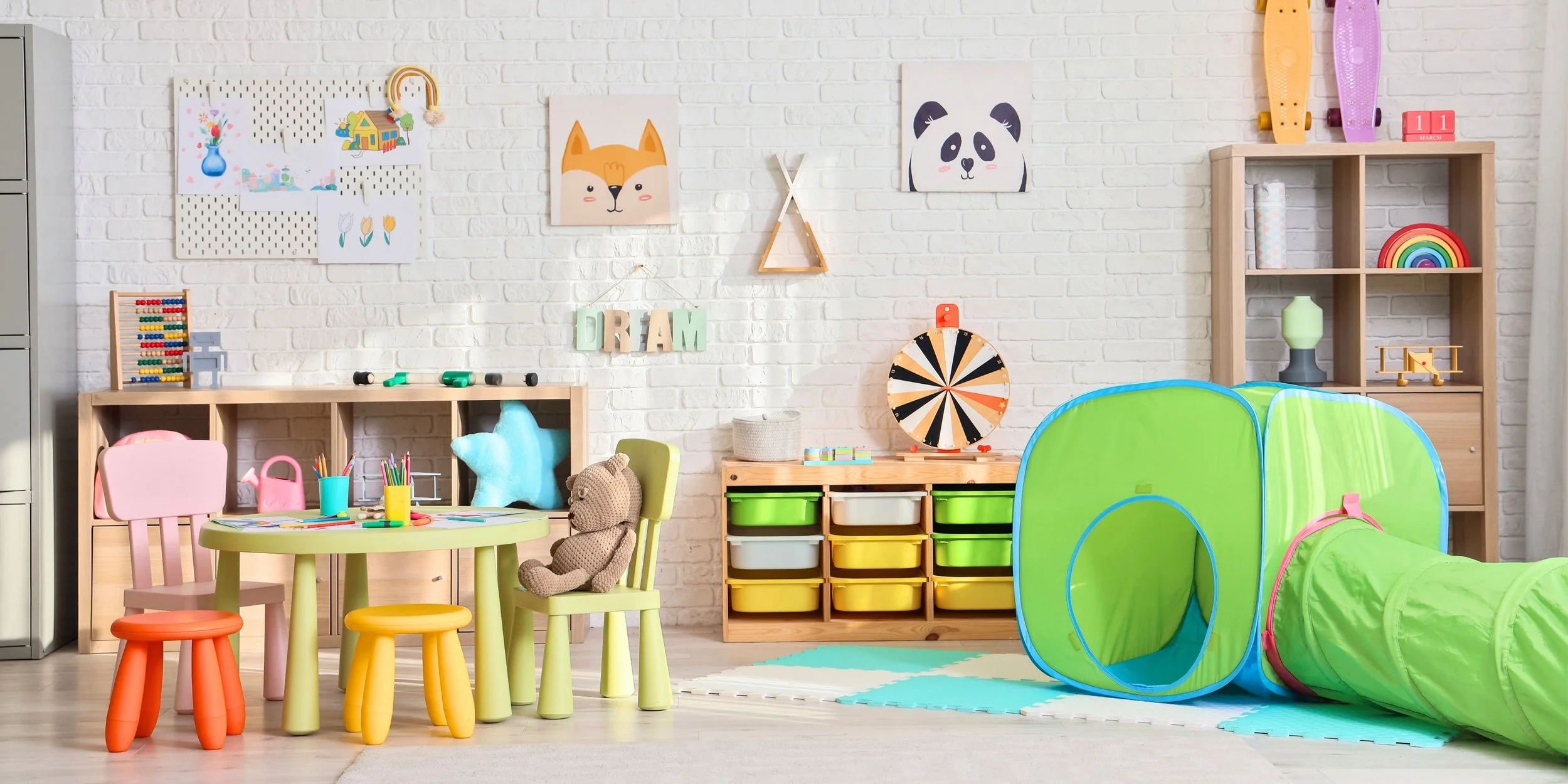
There is a moment in nearly every family home when the toys begin to win.
They migrate into the living room.
They appear beneath dining chairs.
Building blocks somehow end up in hallways.
Art supplies multiply overnight.
A tiny plastic accessory that belongs to something no one can identify becomes the most important object in the house.
Suddenly, what began as a sweet collection of childhood favorites starts to feel like a full-scale takeover.
A well-designed playroom can change that.
The best playrooms are not simply rooms filled with toys. They are thoughtful, imaginative spaces where children can create, move, pretend, read, build, relax and grow. They make everyday routines easier for parents while giving children a place that feels exciting, personal and entirely their own.
A luxury playroom does not have to mean delicate furniture, expensive décor or a room that looks beautiful but cannot actually be touched. True luxury is found in thoughtful design. It is having a place for everything. It is choosing materials that can handle real family life. It is creating a room that encourages children to play independently while still feeling connected to the rest of the home.
Whether you are designing a playroom after moving into a new Houston home, transforming an unused bedroom or finally reclaiming a formal living room that no one uses, these ideas can help you create a space that is polished, practical and full of personality.
Create a Boutique-Style Pretend Play Village
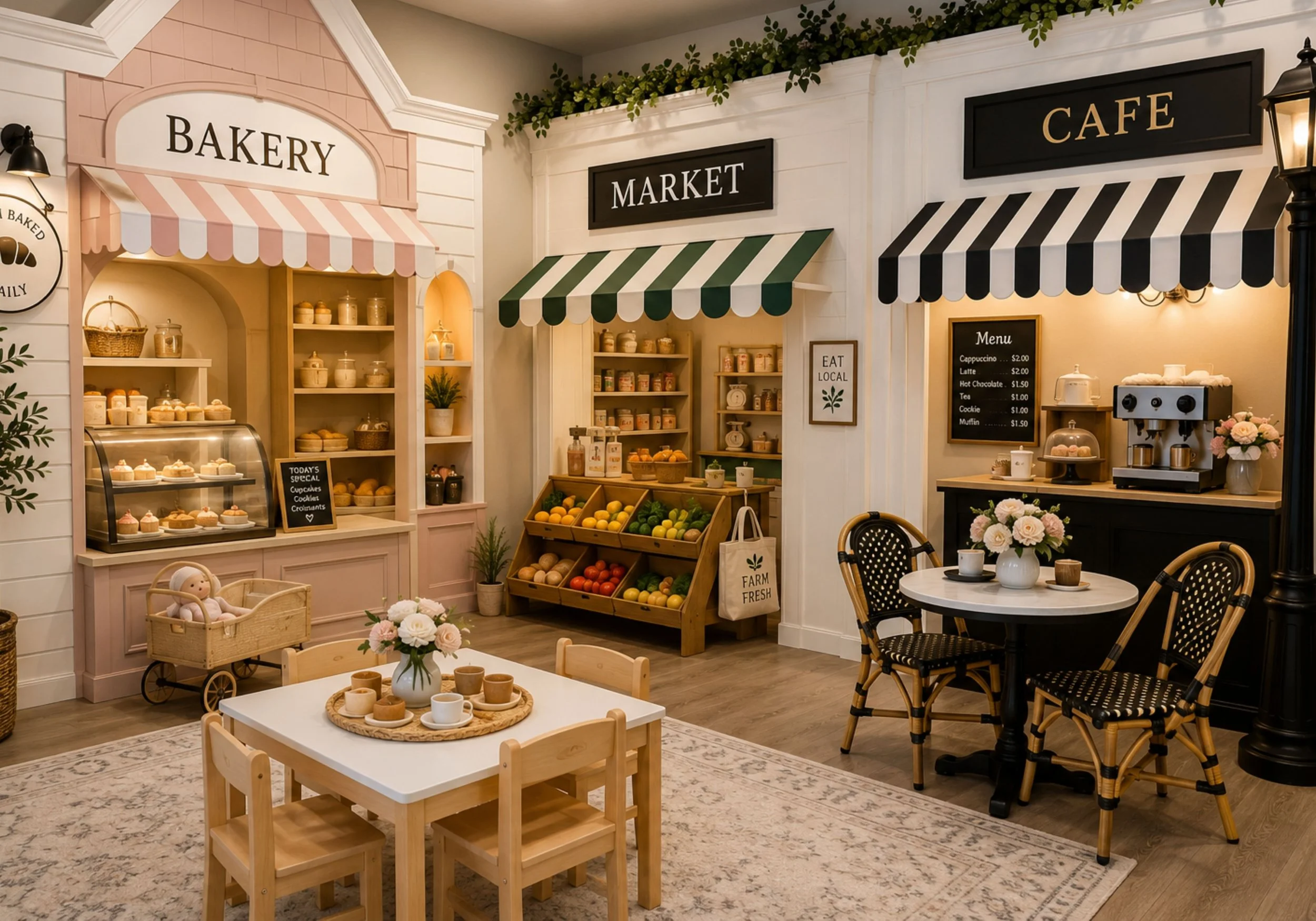
Instead of placing a traditional plastic play kitchen against the wall, imagine creating a charming miniature village inside the room.
One area could become a café with a small counter, wooden pastries, child-sized stools and a menu board. Another section could be designed as a market with baskets, shelves and pretend produce. A third corner might become a veterinarian’s office, beauty salon, flower shop or neighborhood post office.
Built-in storefront façades can make the room feel especially custom. Small awnings, arches, window openings and personalized signs add architectural interest without taking up much additional space.
This type of design encourages open-ended play.
One day, the café may serve breakfast.
The next day, it may become a bakery, restaurant or drive-through window.
Children can practice communication, cooperation, problem-solving and creativity without realizing they are developing those skills.
Keep the overall color palette coordinated so the space feels elevated rather than visually chaotic. Soft neutrals, pale blues, muted greens, dusty pinks and warm natural wood tones work beautifully. The toys provide plenty of color on their own.
Luxury detail: Add small wall sconces, framed pretend menus, miniature pendant lights or personalized aprons for an extra layer of charm.
Practical parent tip: Choose pretend-play pieces that can be used in multiple ways. A simple counter can become a store, restaurant, ticket booth, reception desk or puppet theater.
Design a Two-Story Indoor Playhouse or Loft
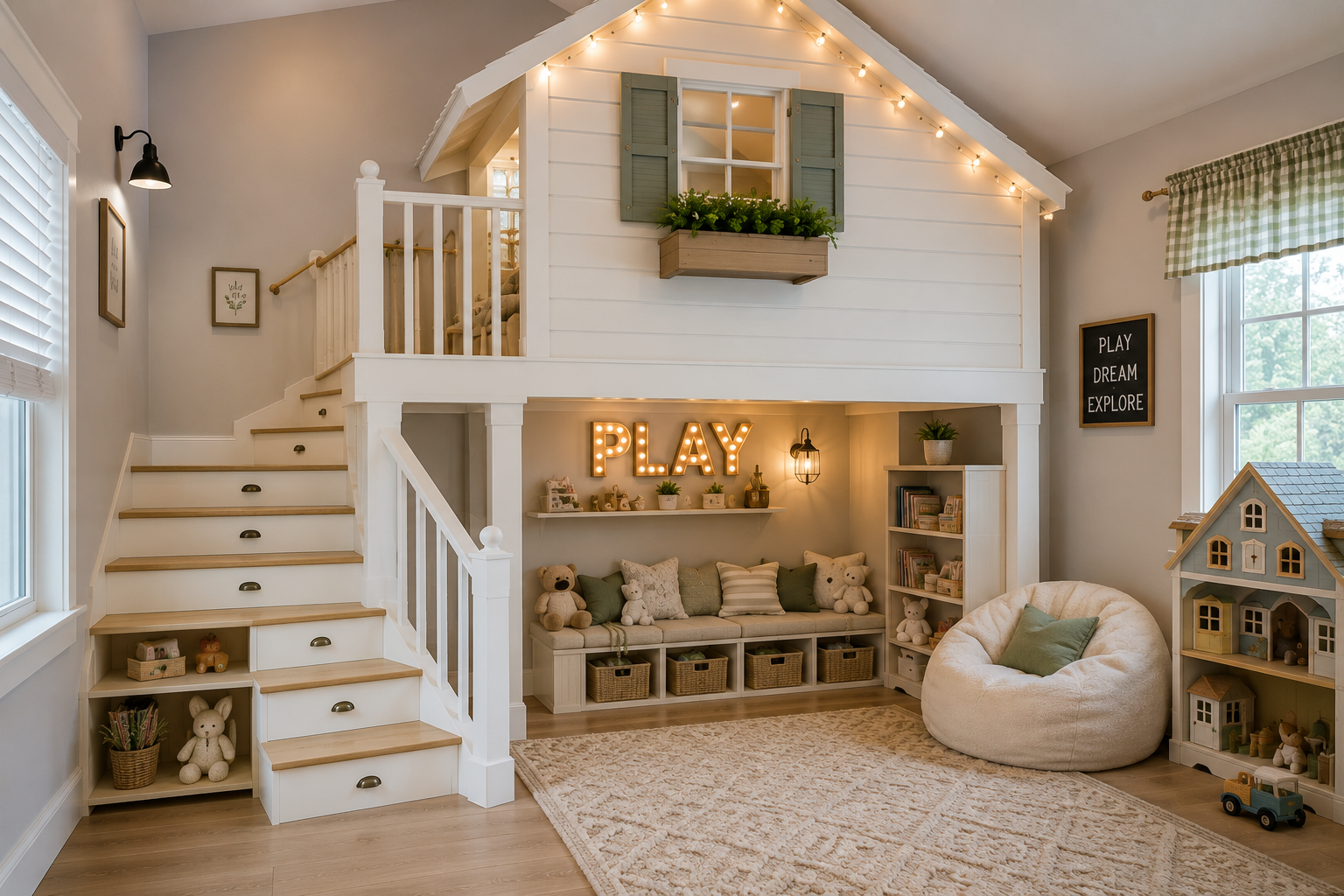
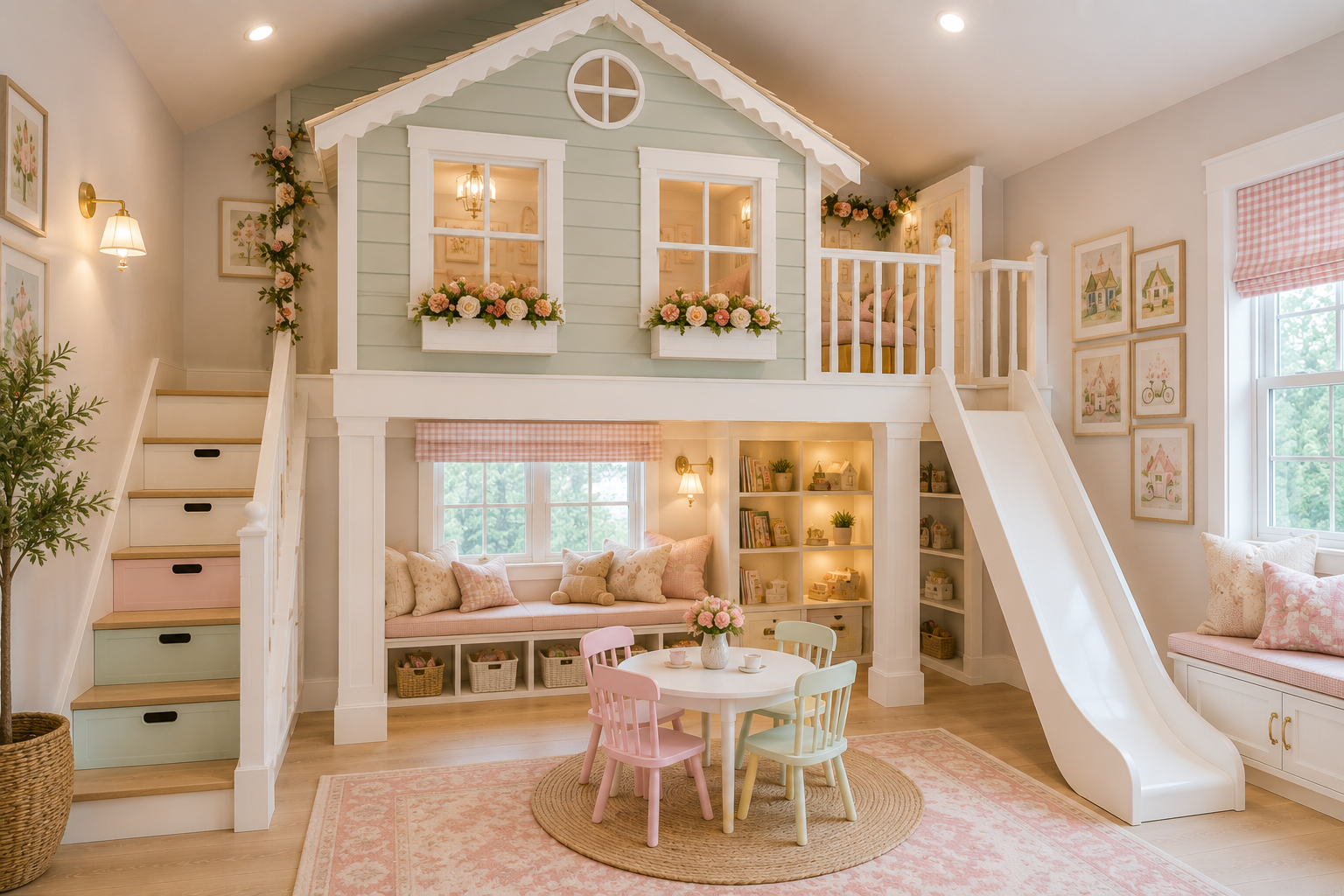
When ceiling height allows, an indoor playhouse or loft can turn an ordinary room into a childhood dream.
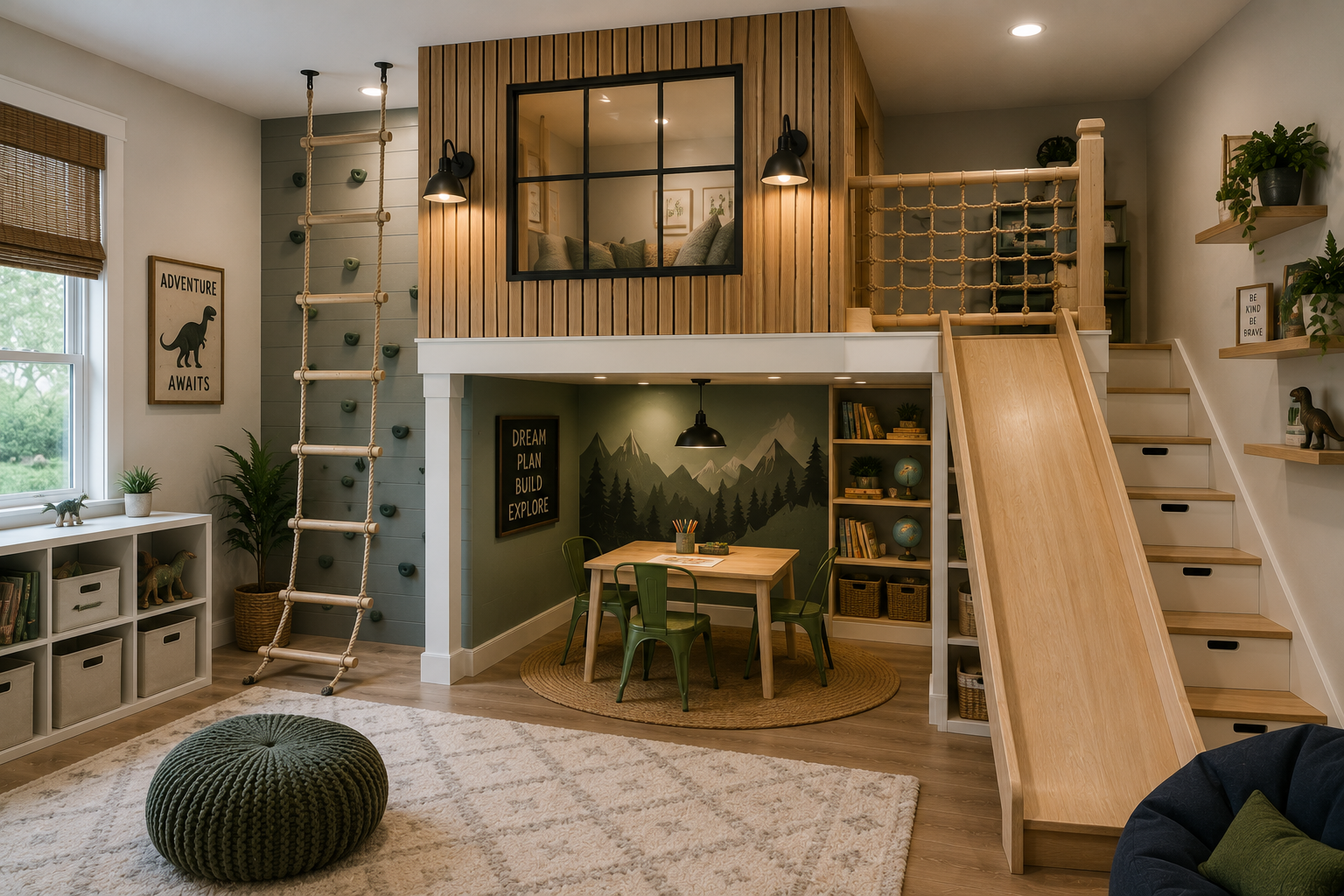
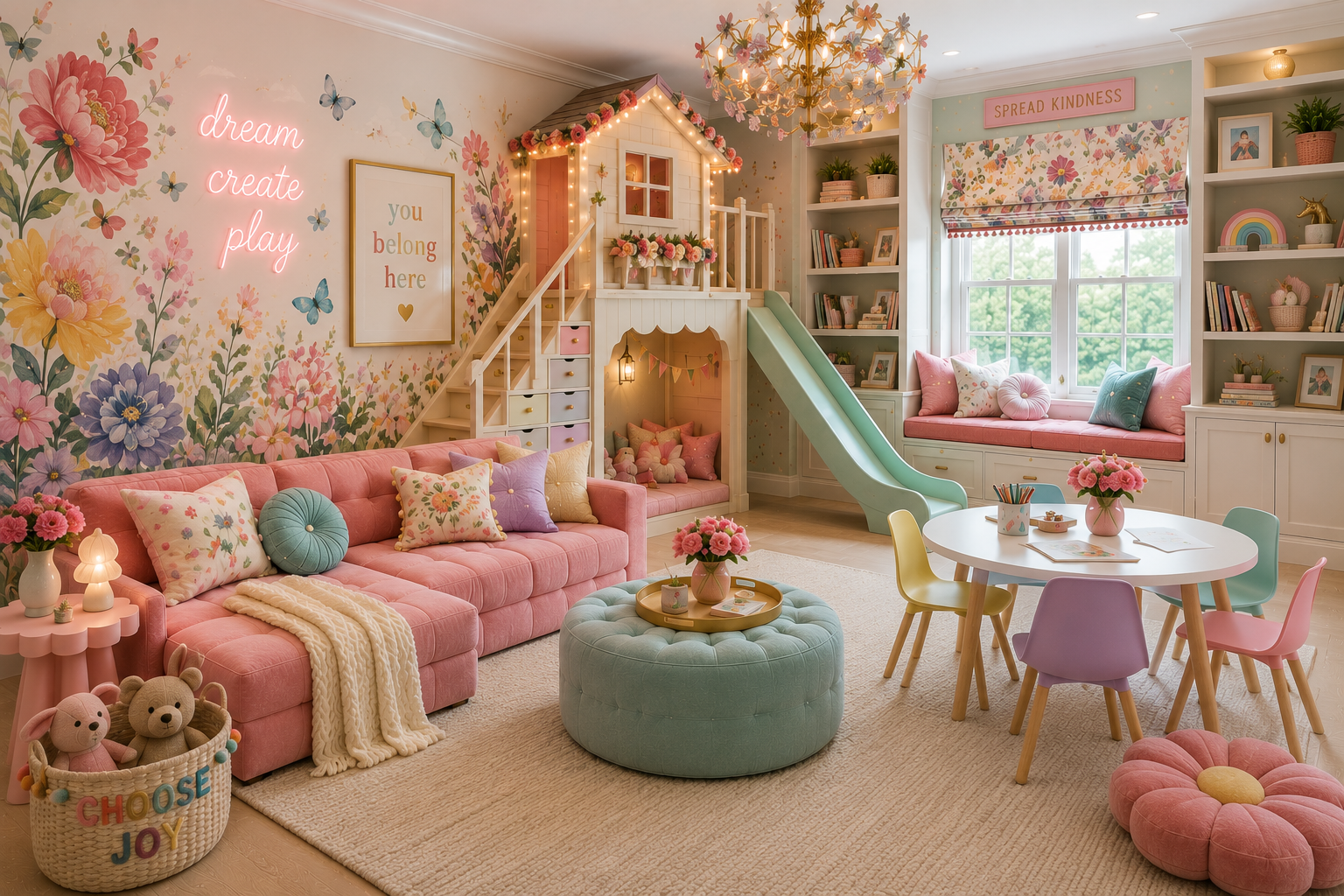
The lower level might include a reading nook, play kitchen or craft station. The upper level can become a clubhouse, quiet retreat or imaginative hideaway. Add stairs with built-in drawers, a small slide or a lookout window to make the structure feel adventurous.
A custom indoor loft is especially valuable because it uses vertical space. Instead of filling every wall and corner with furniture, you create multiple activity zones within the same footprint.
The design can mirror the style of the home.
In a traditional house, the playhouse might include shutters, trim and a pitched roof.
In a modern home, it could feature clean lines, curved openings and warm wood slats.
In a whimsical room, it might look like a treehouse, castle, cottage or miniature Houston townhome.
Safety should guide every design decision. Railings, stair dimensions, rounded edges, secure anchoring and age-appropriate access are essential. A qualified carpenter or contractor should build any elevated structure.
Luxury detail: Add soft lighting beneath the loft, upholstered wall panels or a custom mural behind the structure.
Practical parent tip: Design the lower section so it can eventually become a desk, lounge area or storage zone as children outgrow pretend play.
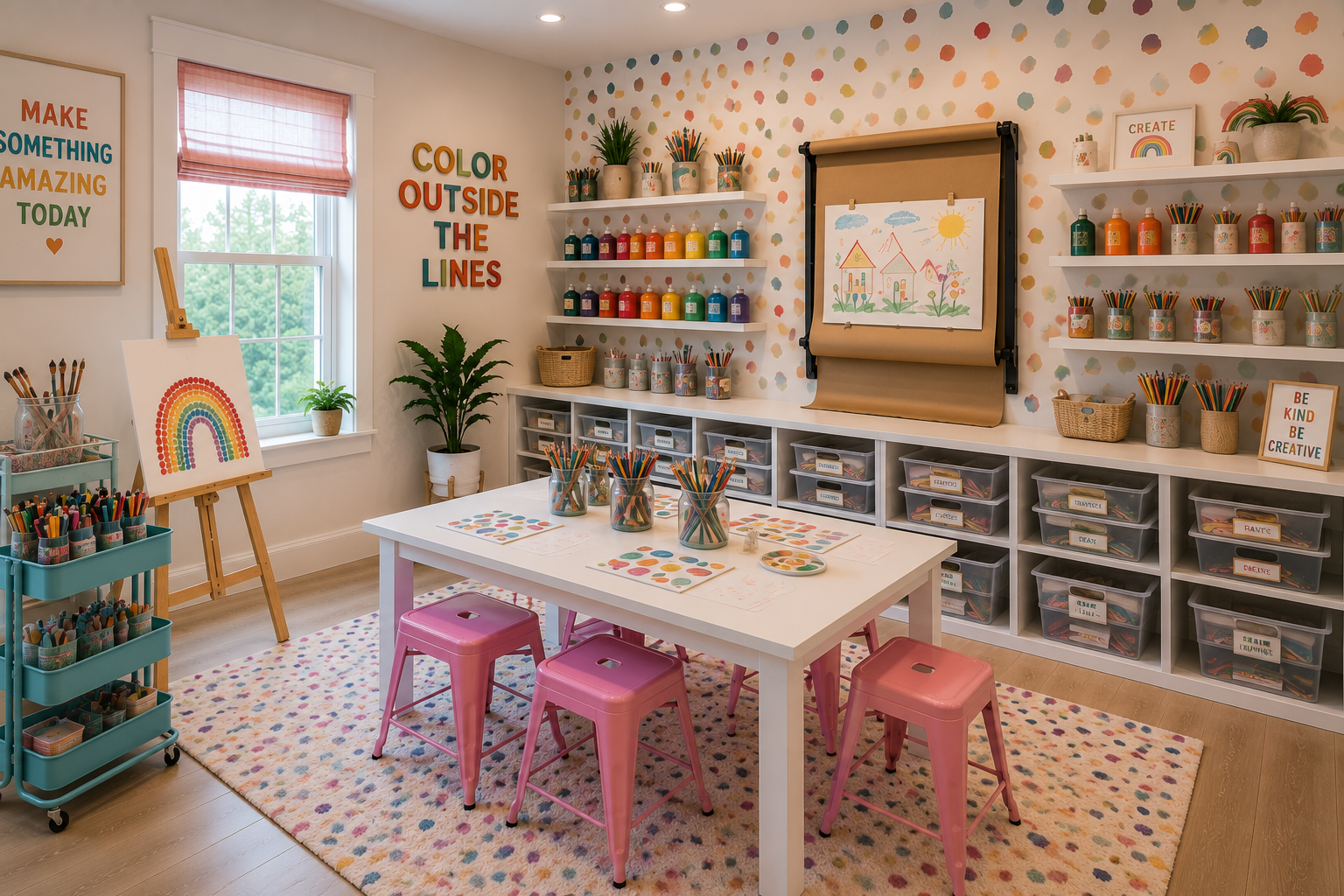
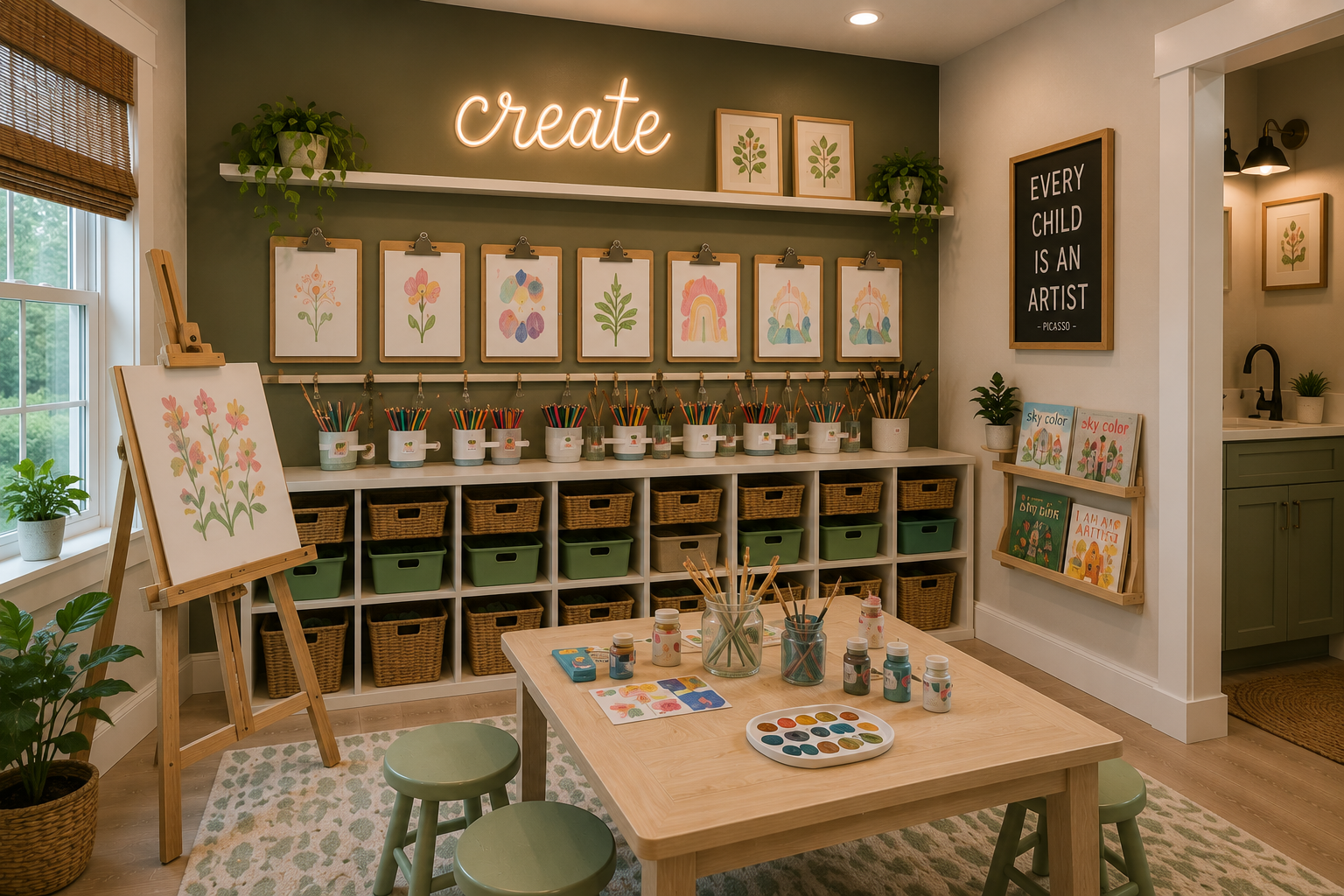
Build a Beautiful Art Studio for Little Creators
Children’s art supplies have a remarkable ability to spread across an entire home.
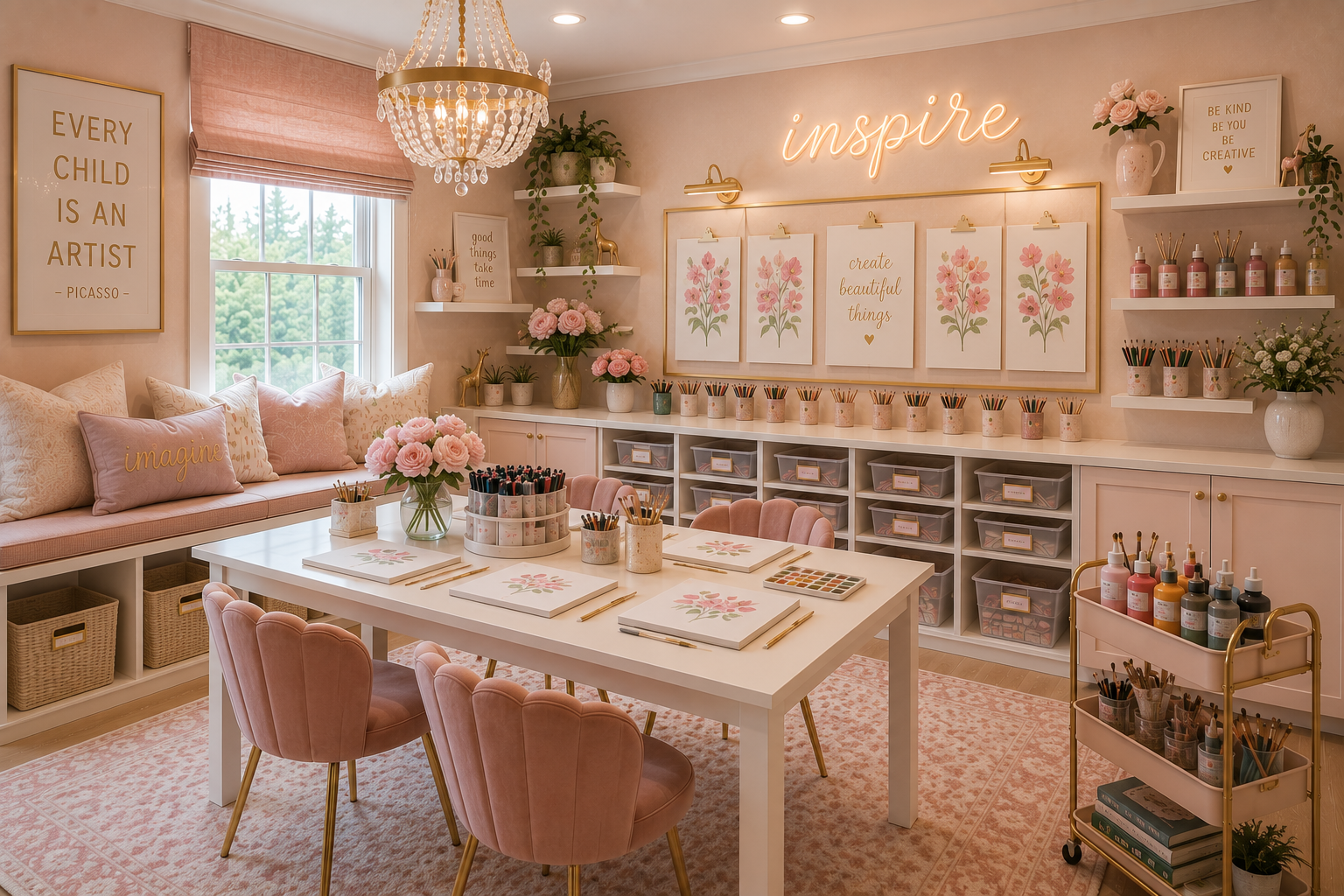
A dedicated art studio gives crayons, paint, markers, clay, paper and craft materials a permanent place to live. More importantly, it gives children permission to create without parents worrying that glitter glue is quietly making its way toward the formal dining table.
Start with a large, durable work surface. A child-height table is ideal for younger children, while an adjustable or standard-height table can grow with the family. Include chairs or stools that are easy to wipe clean.
Use shallow drawers, labeled bins, wall-mounted organizers and clear containers so children can see and access their supplies.
Display rolls of paper on mounted dowels.
Add cups for pencils and brushes.
Pegboards can hold scissors, tape, rulers and frequently used tools.
The room will feel more polished when supplies are organized by color or category. Framed corkboards, magnetic strips or art rails make it easy to rotate finished masterpieces.
Choose washable paint, stain-resistant flooring and durable upholstery. A luxury children’s room should invite creativity, not make everyone nervous about using it.
Luxury detail: Install a small sink, drying rack or built-in cabinetry with a stone or solid-surface countertop.
Practical parent tip: Keep everyday supplies within reach and place messier materials, such as permanent markers or specialty paint, in higher cabinets.
Create an Enchanted Reading Retreat
Every playroom needs a place where the energy level can come down.
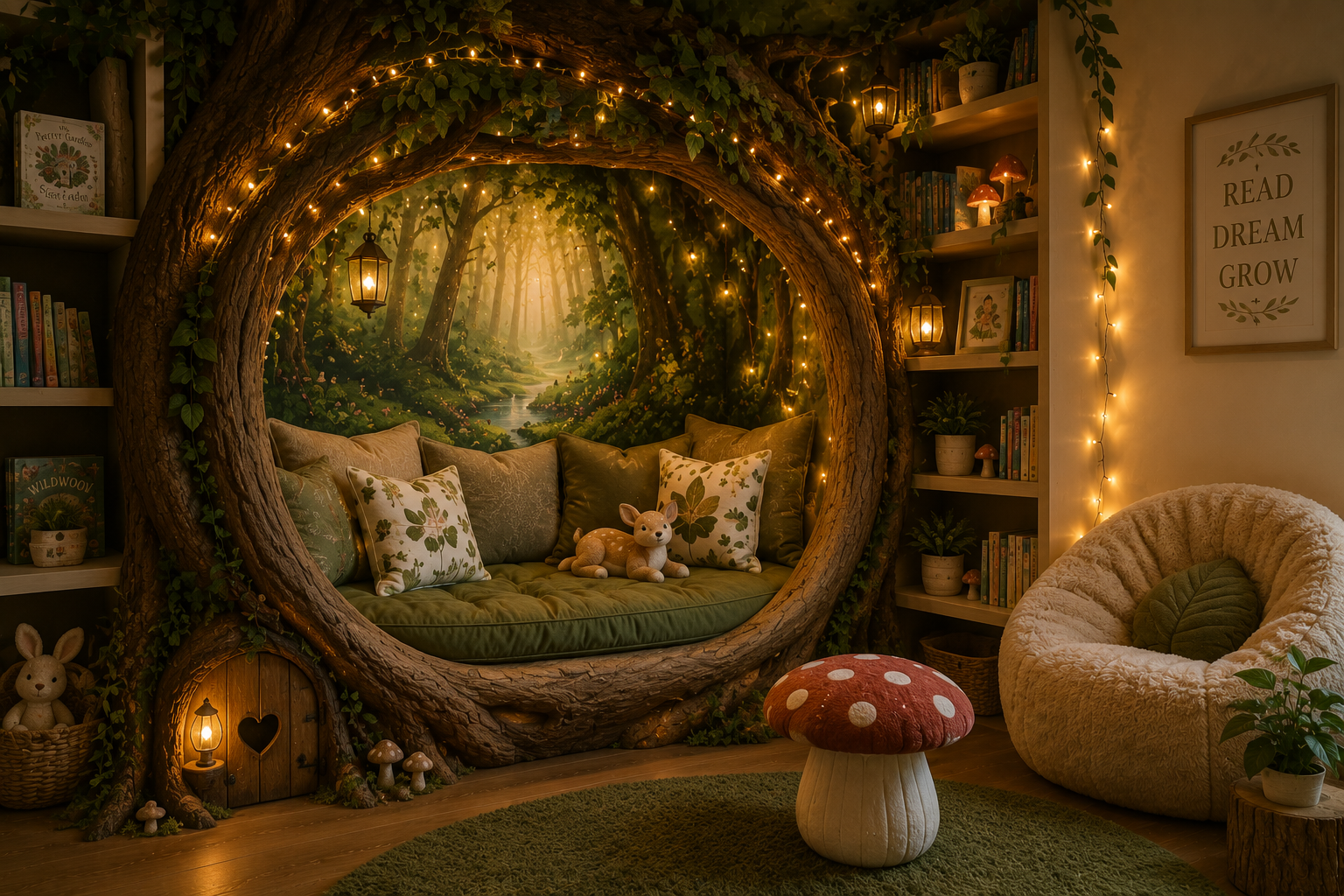
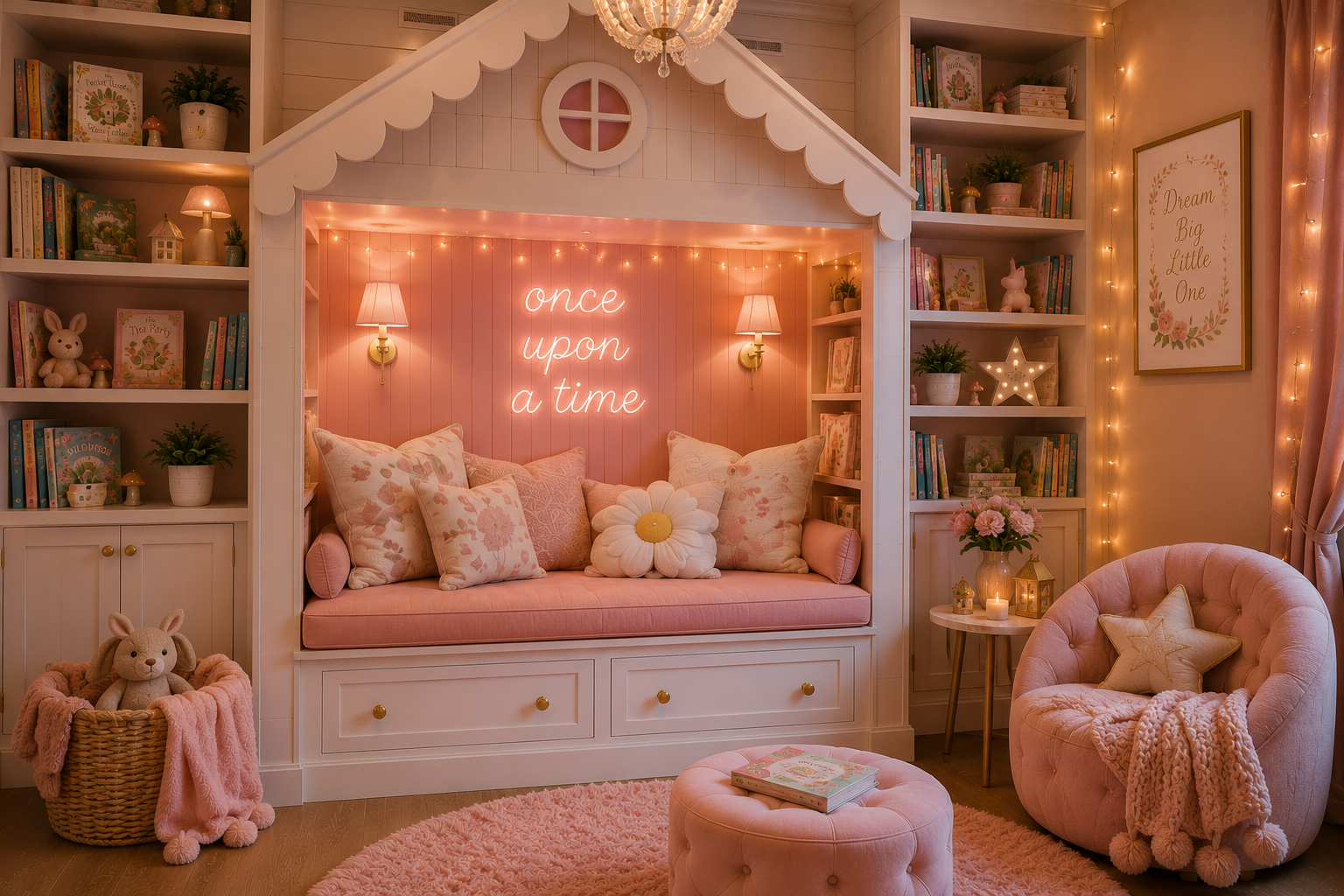
A reading retreat can become a cozy escape for story time, quiet play and those moments when a child simply needs a little space. It can be as simple as a window seat with cushions or as elaborate as a built-in library nook beneath a staircase or loft.
Consider using a canopy, curved opening, tent-inspired enclosure or upholstered alcove to make the area feel separate from the rest of the room. Add pillows, a soft rug, blankets and warm lighting.
Book storage should be easy for children to navigate.
Front-facing bookshelves work especially well, because children can see the covers rather than only the spines.
Built-in ledges or picture rails allow favorite books to become part of the décor.
Keep the space comfortable enough for adults to join. A reading nook that only fits a preschooler may be adorable, but it limits shared reading. An oversized floor cushion, small loveseat or generous bench allows parents, siblings and grandparents to gather together.
Luxury detail: Add custom upholstery, wallpaper inside the nook, a miniature chandelier or personalized bookplates.
Practical parent tip: Rotate the displayed books seasonally to keep the area feeling fresh without purchasing new books constantly.
Explore More Home and Lifestyle Inspiration in the Move Houston Magazine.

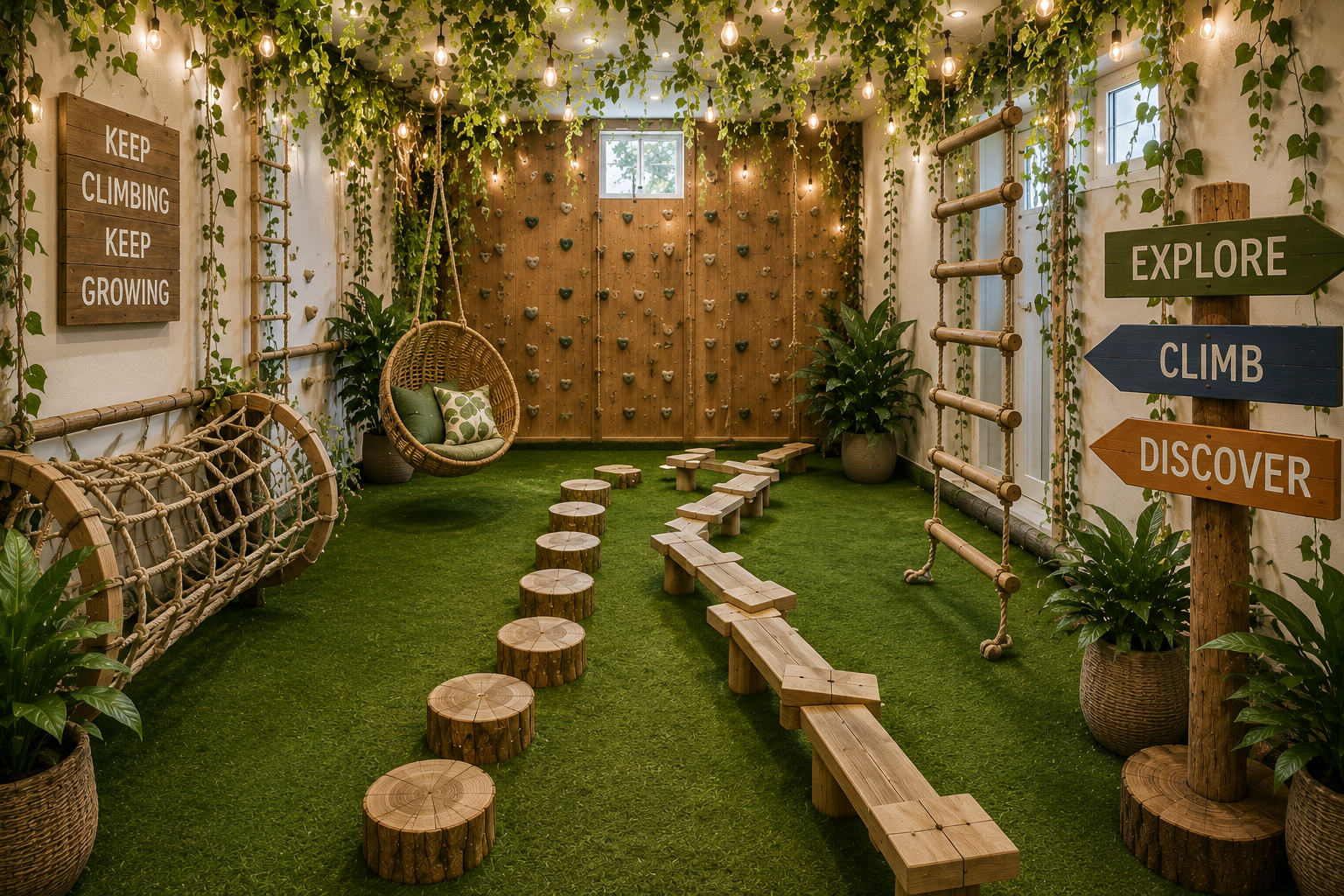
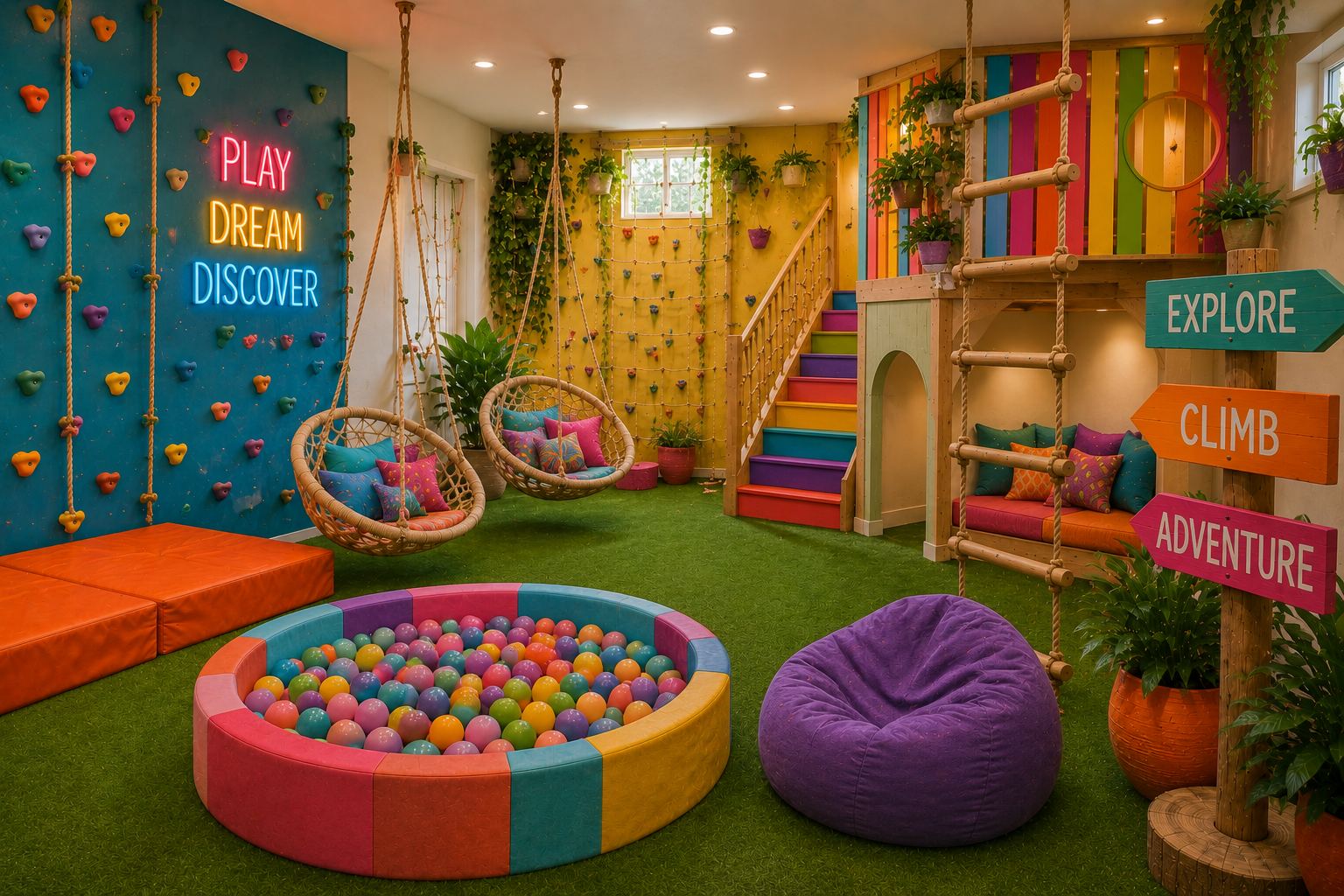
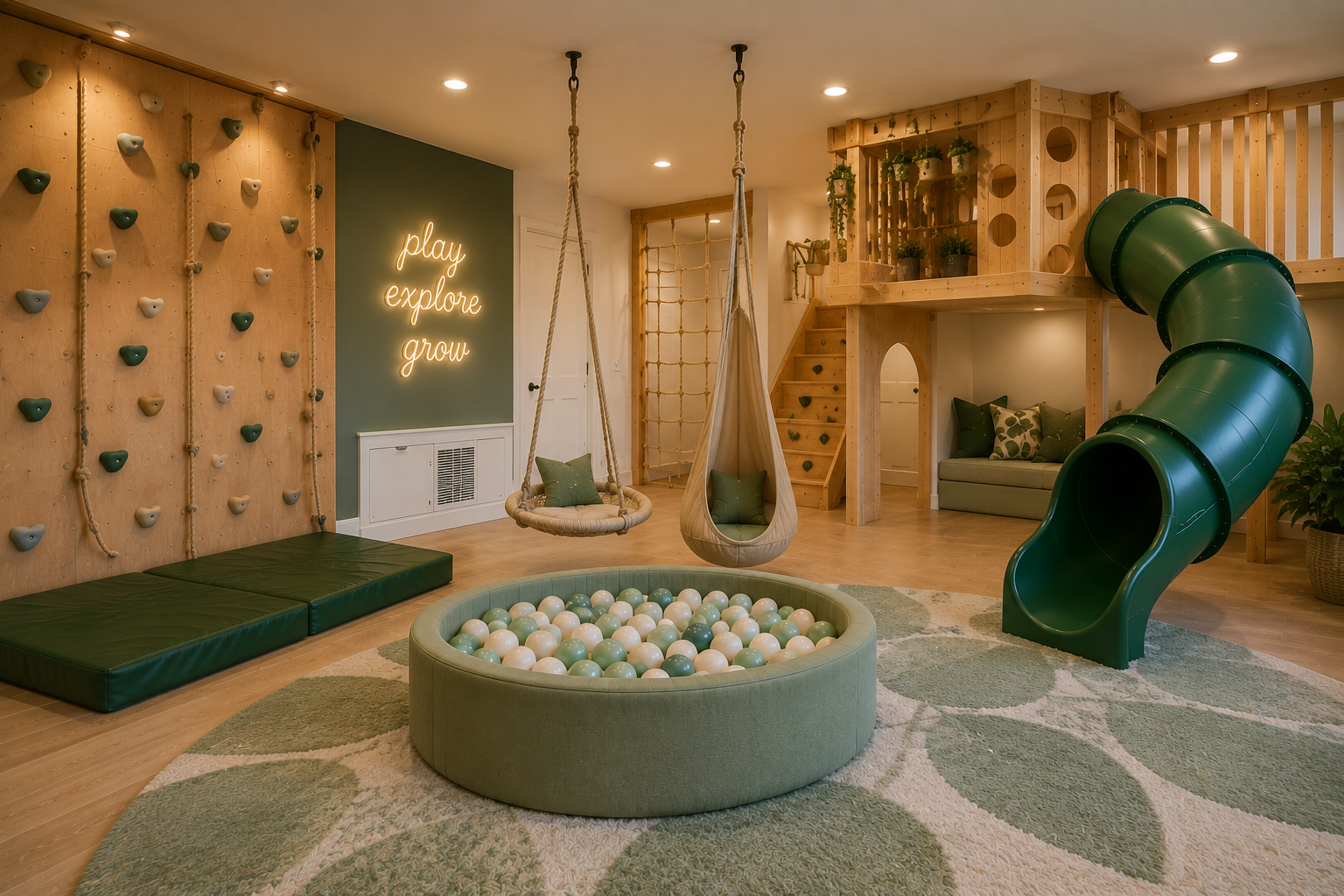
Add an Indoor Movement and Adventure Zone
Children need places to move, especially during Houston’s hottest summer afternoons, rainy days and busy weeks when outdoor play is not always convenient.
An indoor movement zone can include climbing holds, monkey bars, balance beams, gym rings, foam blocks, a mini trampoline, sensory swings or soft tumbling mats. The goal is not to turn the playroom into a commercial gym. It is to provide safe, age-appropriate opportunities for movement.
Choose equipment based on the room’s size and your children’s developmental stages.
A climbing wall can become a beautiful design feature when the holds coordinate with the room’s color palette.
Wood climbing structures often feel more sophisticated than brightly colored plastic equipment.
Flooring matters. Use thick mats or impact-absorbing surfaces around climbing and swinging elements.
Any ceiling-mounted equipment should be professionally installed into appropriate structural supports.
A movement zone can be especially helpful for active children who need physical play before settling into quieter activities. It also adds a sense of adventure that makes the playroom feel distinctive.
Luxury detail: Create an indoor climbing arch, sculptural wooden gym or custom obstacle course that blends into the room’s architecture.
Practical parent tip: Leave enough open floor space for dancing, building forts and imaginative games that require room to spread out.
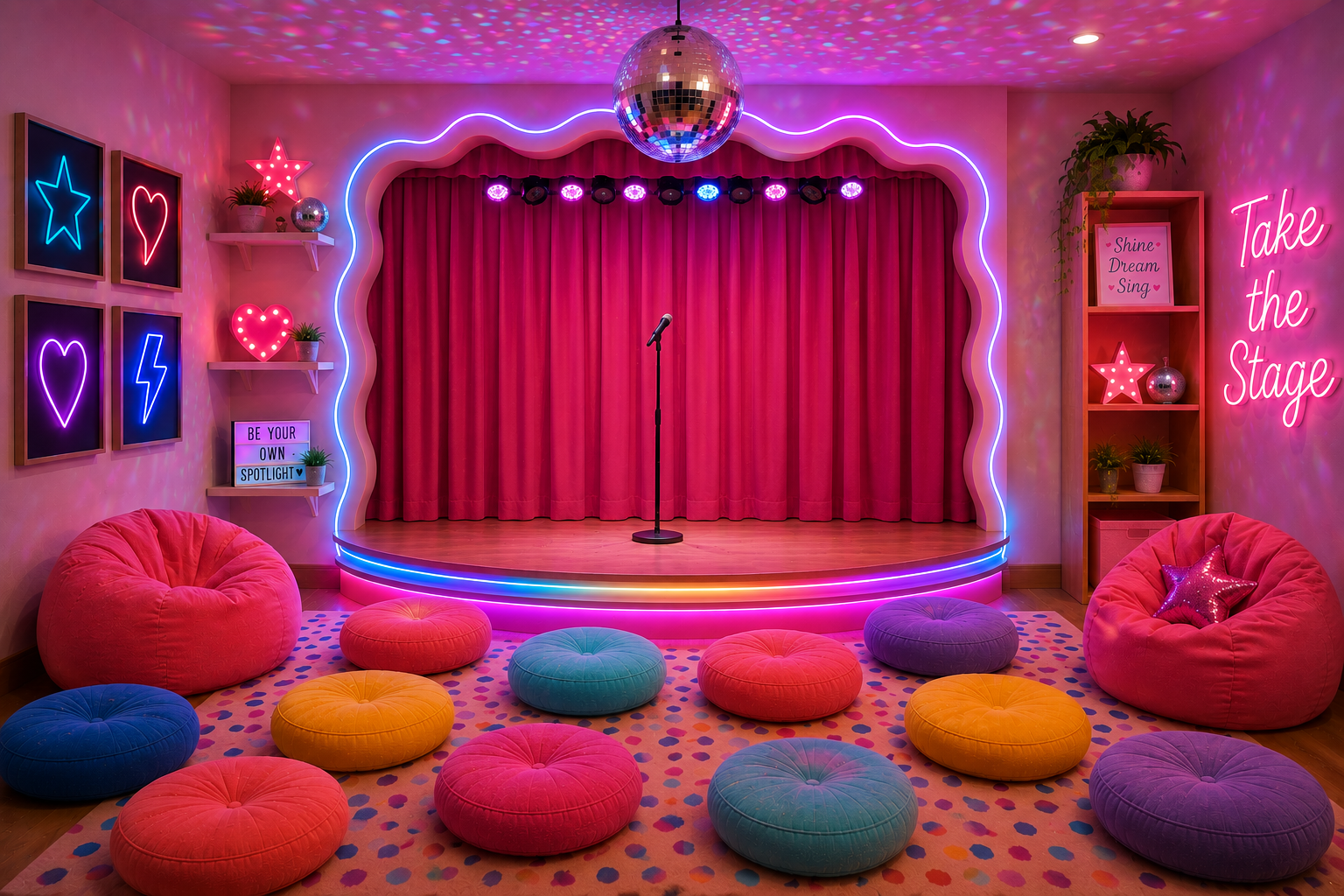
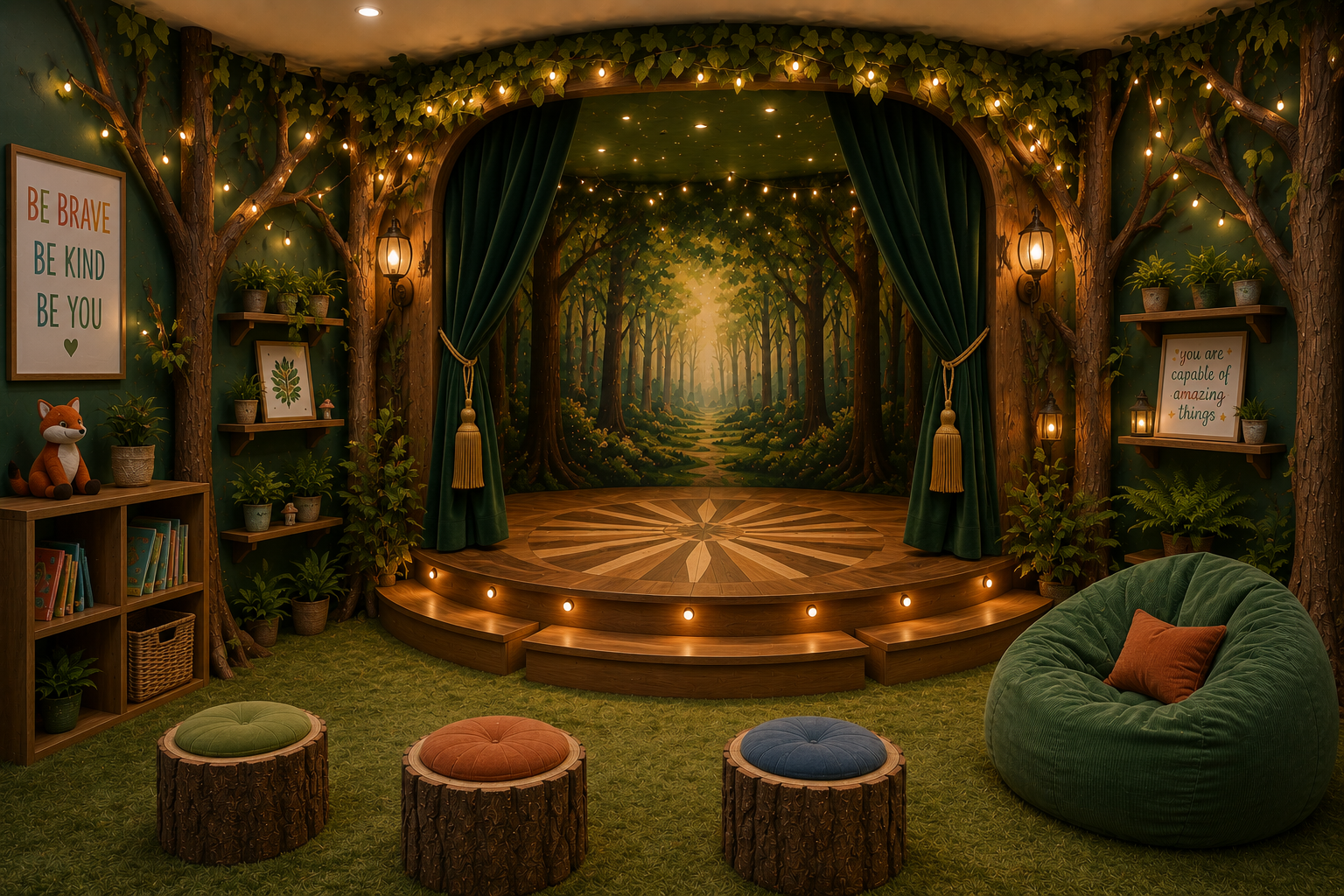
Design a Miniature Stage and Performance Space
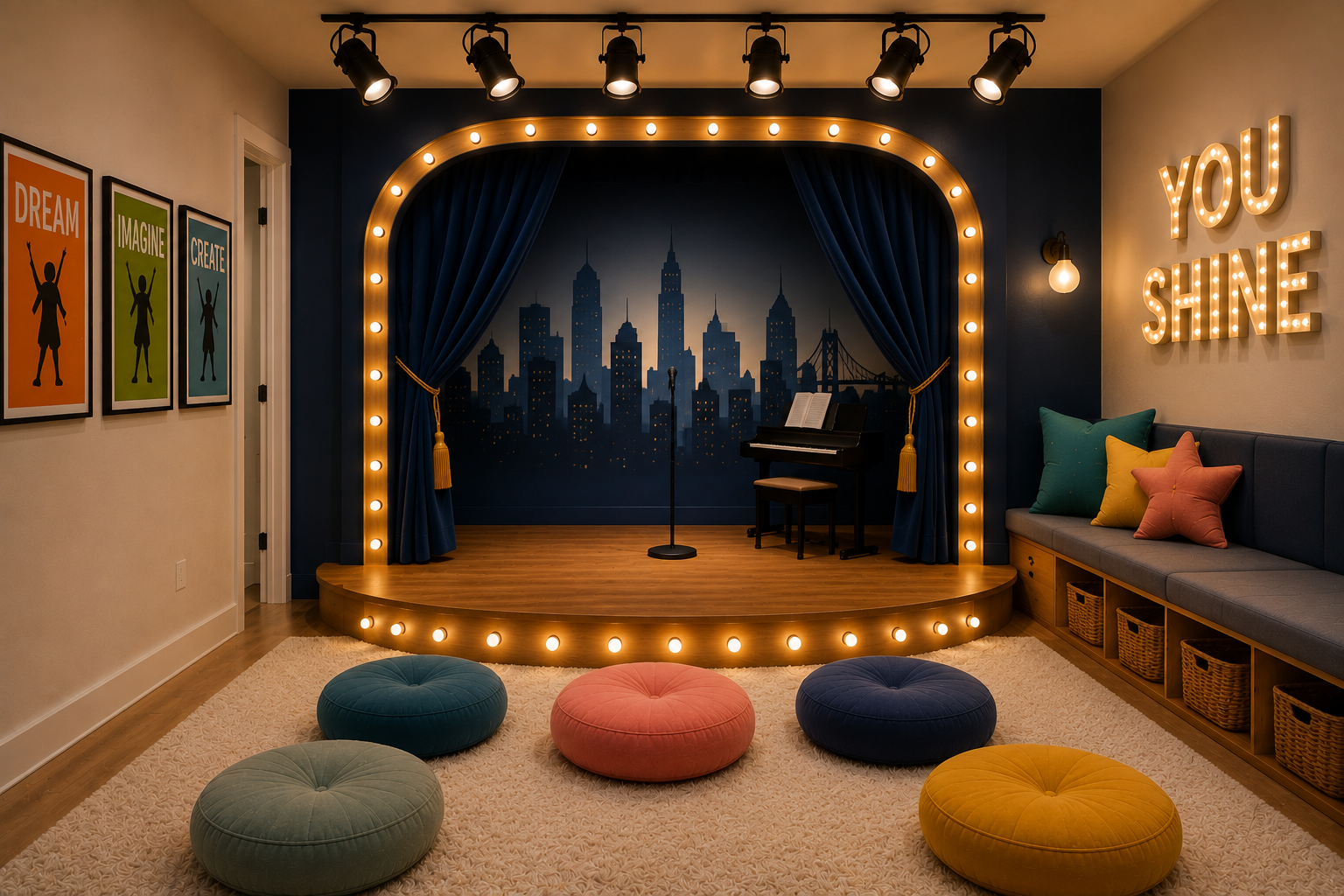
For children who love to sing, dance, act, tell stories or put on elaborate living-room productions, a performance zone can be magical.
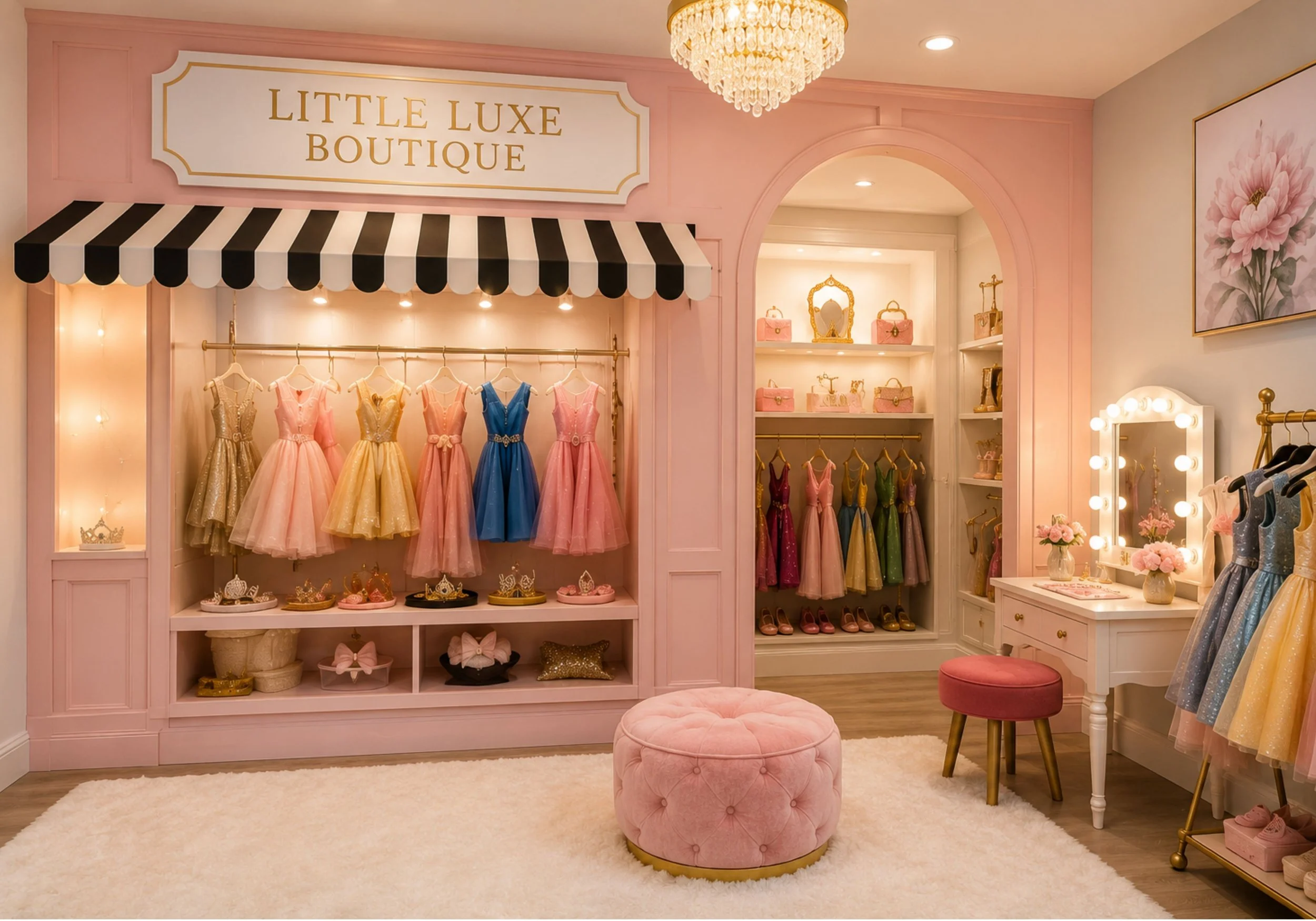
A small raised platform immediately creates the feeling of a stage. Add curtains, soft spotlights and a backdrop that can change with the performance. A nearby costume closet can hold dress-up clothes, hats, scarves, instruments and props.
The stage can serve many purposes.
It can become a puppet theater, karaoke area, dance floor, storytelling platform or family movie-night space.
Children can use it for school presentations and talent-show practice as they grow older.
Keep the design flexible. A permanent mural may limit the types of performances children imagine, while a neutral backdrop, curtain rod or magnetic wall can support endless possibilities.
A wall-mounted television or projector can transform the stage area into a small home theater. Floor cushions, beanbags or modular seating can be arranged for the audience and moved aside when more play space is needed.
Luxury detail: Add a velvet curtain, decorative trim, wireless microphone system or dimmable lighting.
Practical parent tip: Store costumes on child-height hooks so children can dress up independently without emptying an entire bin onto the floor.
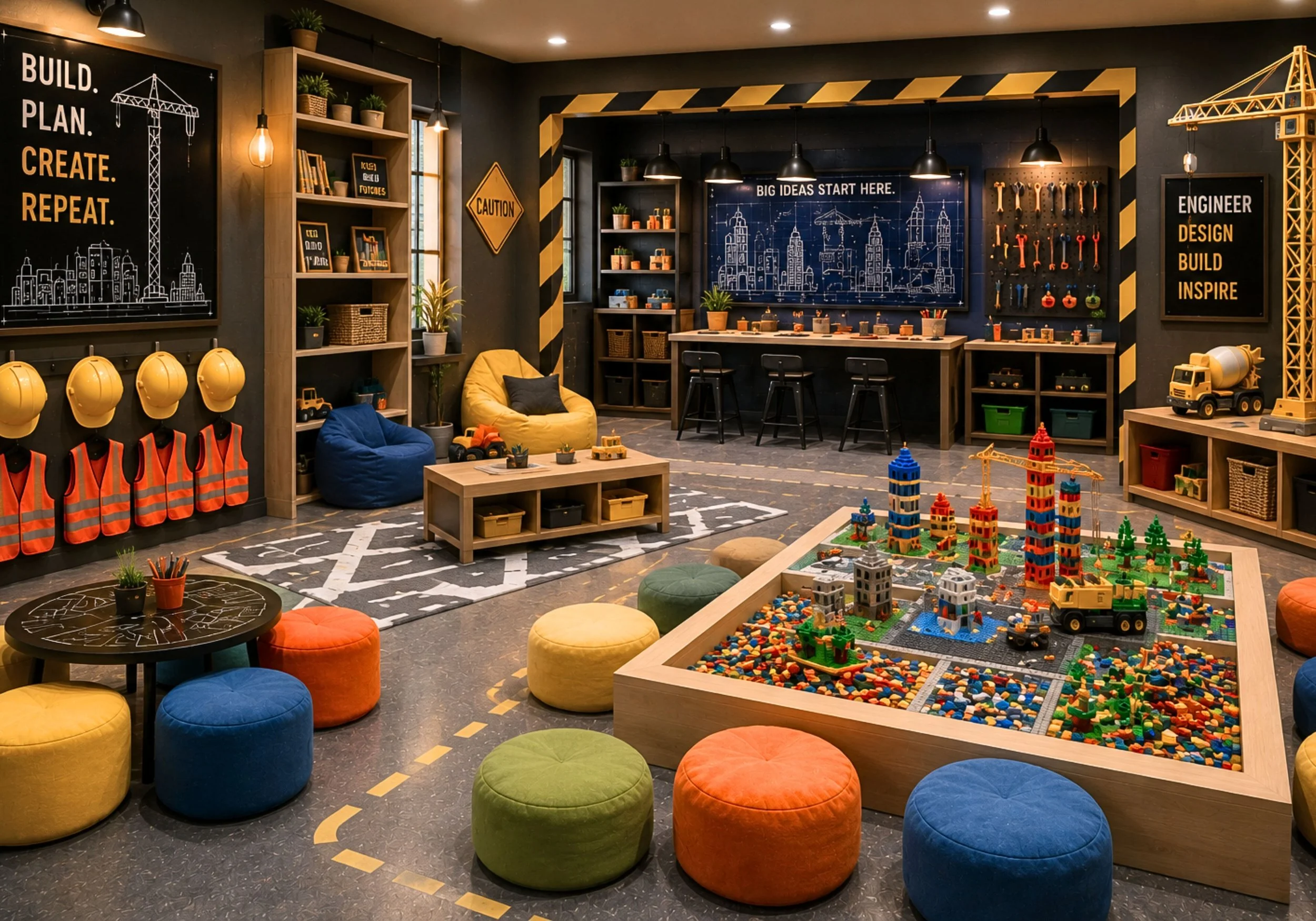
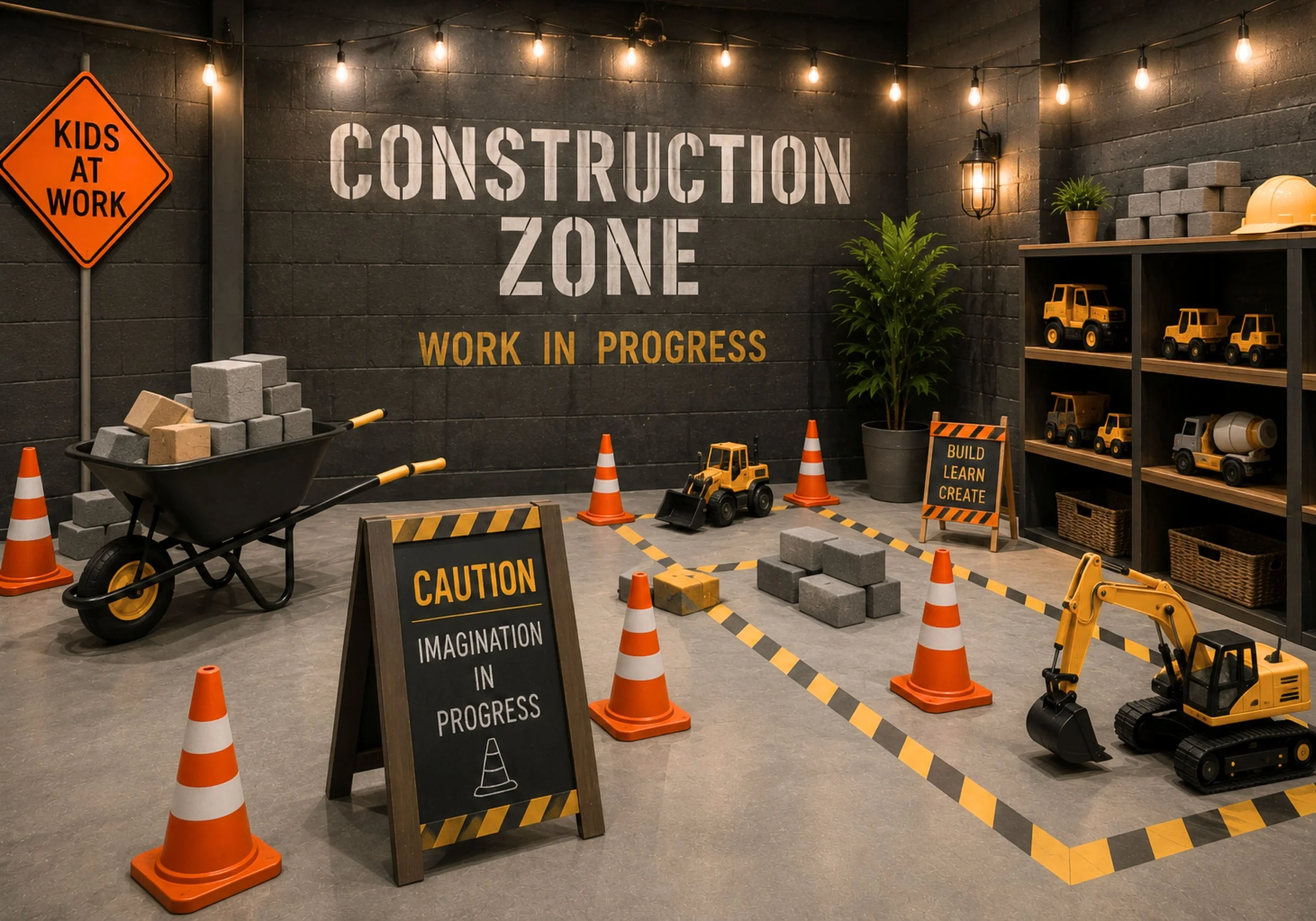
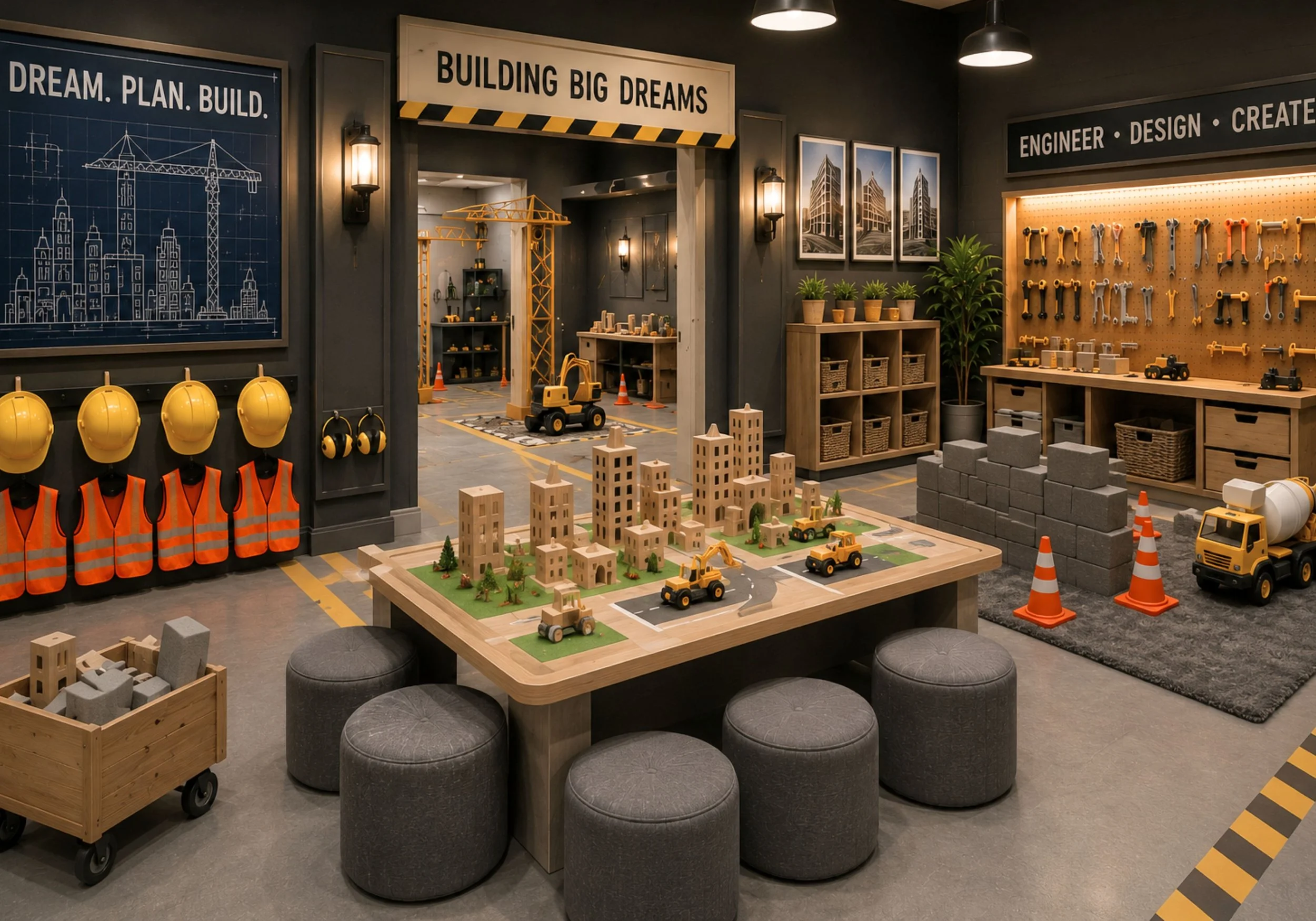
Create a Sophisticated Building and Construction Zone
Some children can spend hours building cities, towers, roads and entire imaginary worlds.
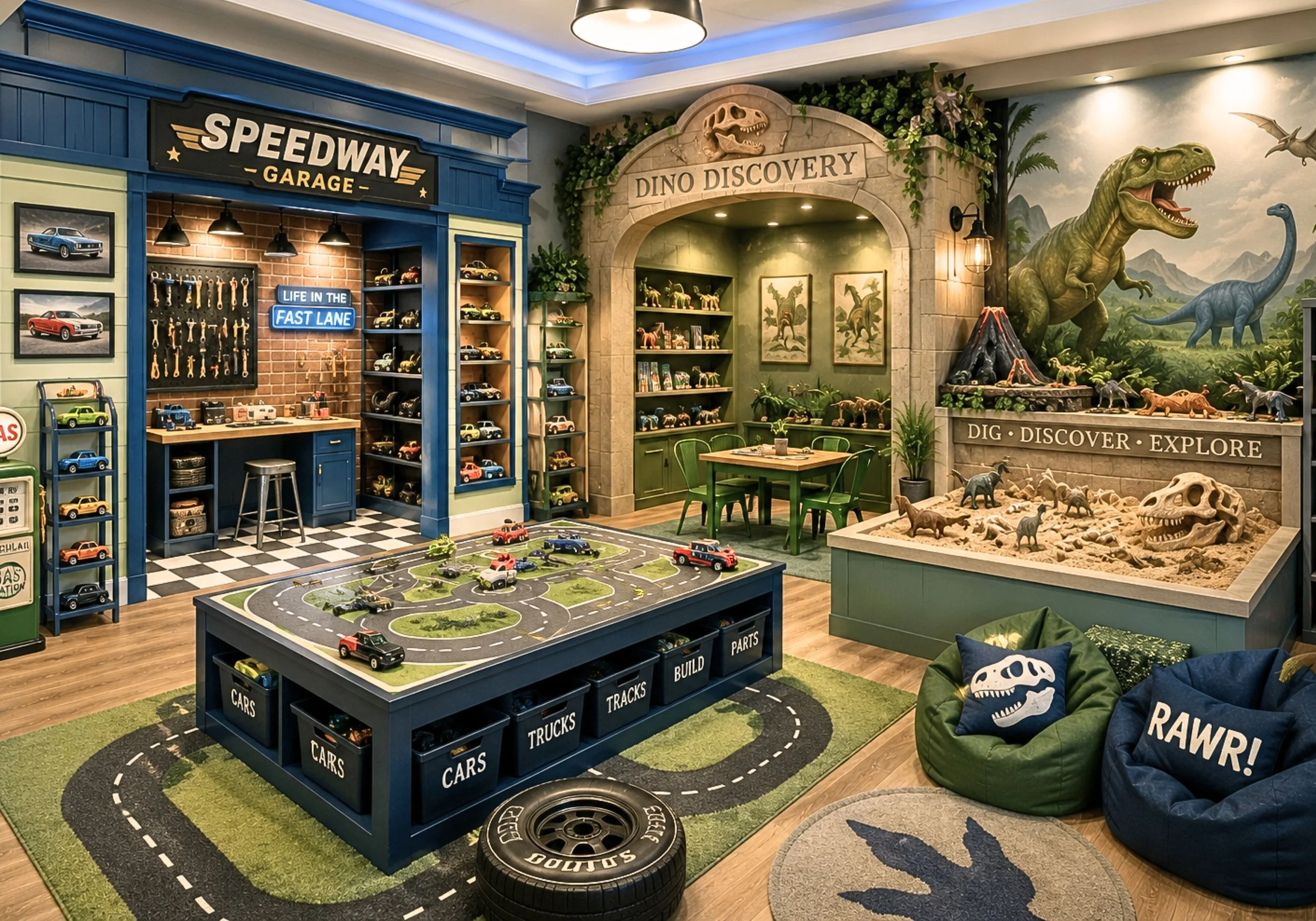
A dedicated construction area gives blocks, magnetic tiles, trains, toy vehicles and building sets a place to remain in progress. This matters because nothing tests a young architect’s patience quite like being told to dismantle a masterpiece because dinner is being served.
Use a wide, low table with storage beneath it.
Consider adding drawers for small pieces and open shelves for larger sets.
A slightly raised edge around the tabletop can prevent pieces from rolling onto the floor.
Wall-mounted road maps, city illustrations or architectural prints can provide inspiration without making the room feel overly themed. A magnetic wall can also become an interactive building surface.
For train enthusiasts, a removable train-table insert allows the area to evolve. For older children, the same table can eventually support model building, robotics, puzzles or homework projects.
Luxury detail: Commission a custom play table that matches the cabinetry and furniture throughout the home.
Practical parent tip: Use trays to separate unfinished projects. Each child can slide a tray onto a shelf and return to the creation later.
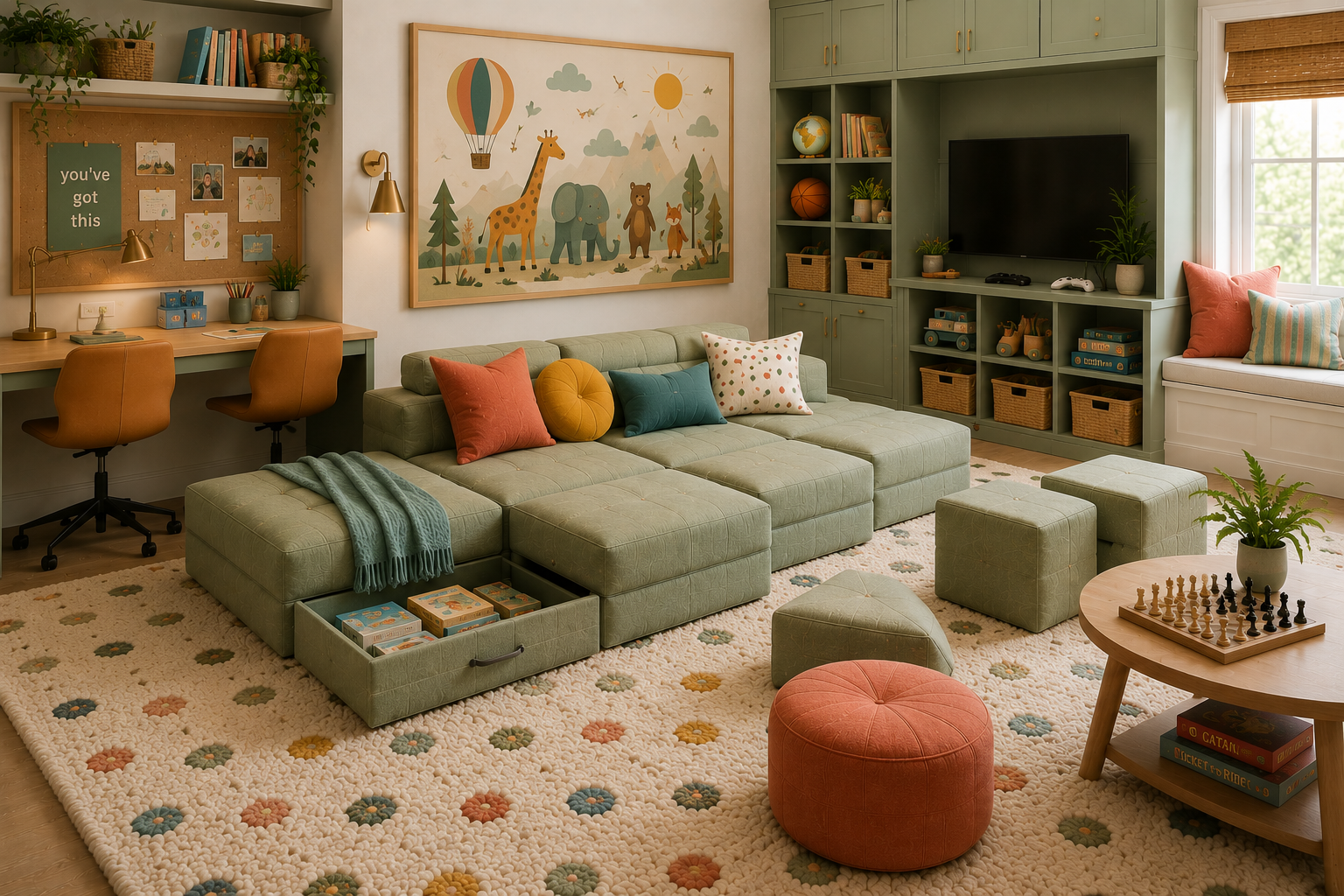
Install Custom Storage That Looks Like Furniture
No matter how beautiful the playroom is, it will not function well without thoughtful storage.
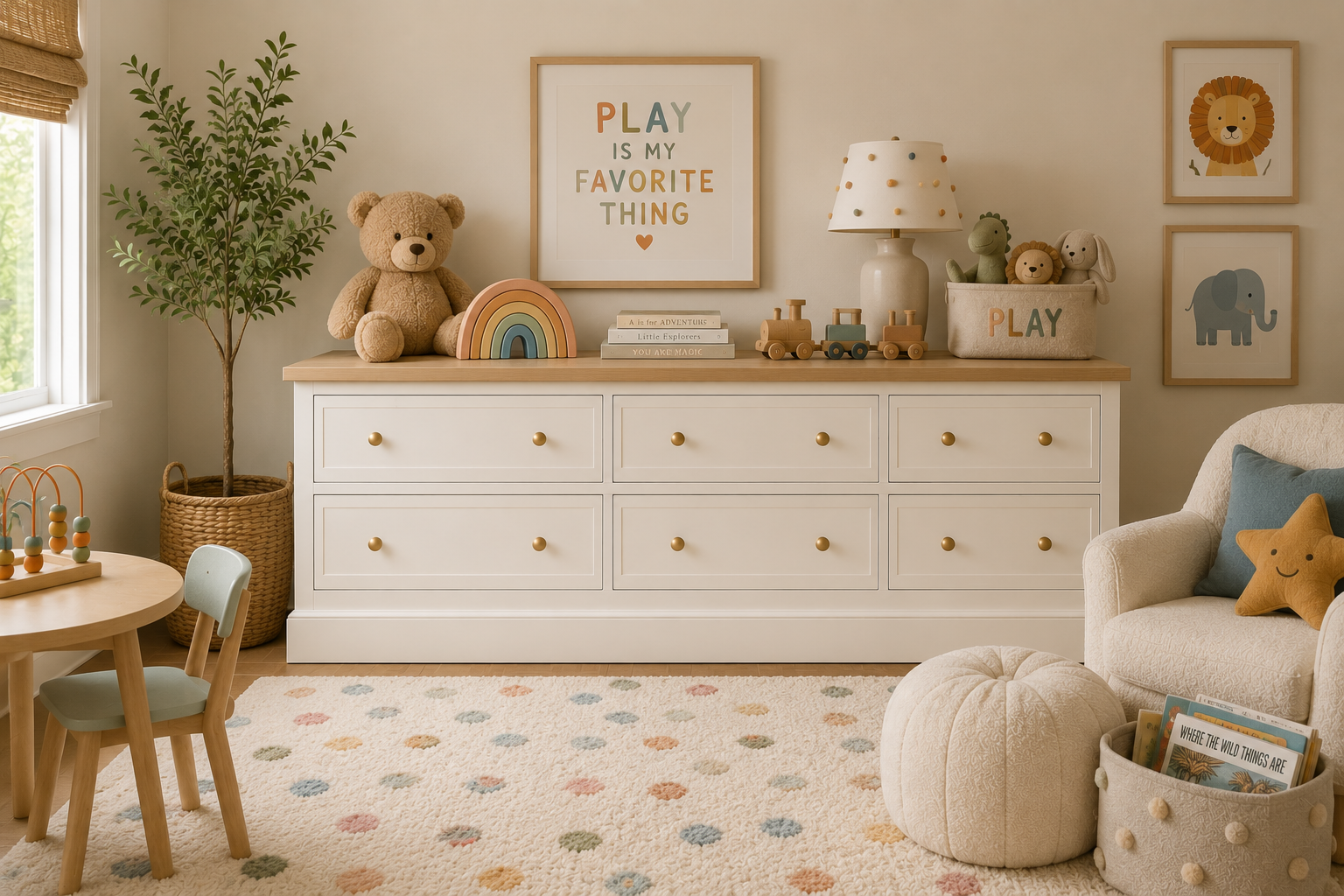
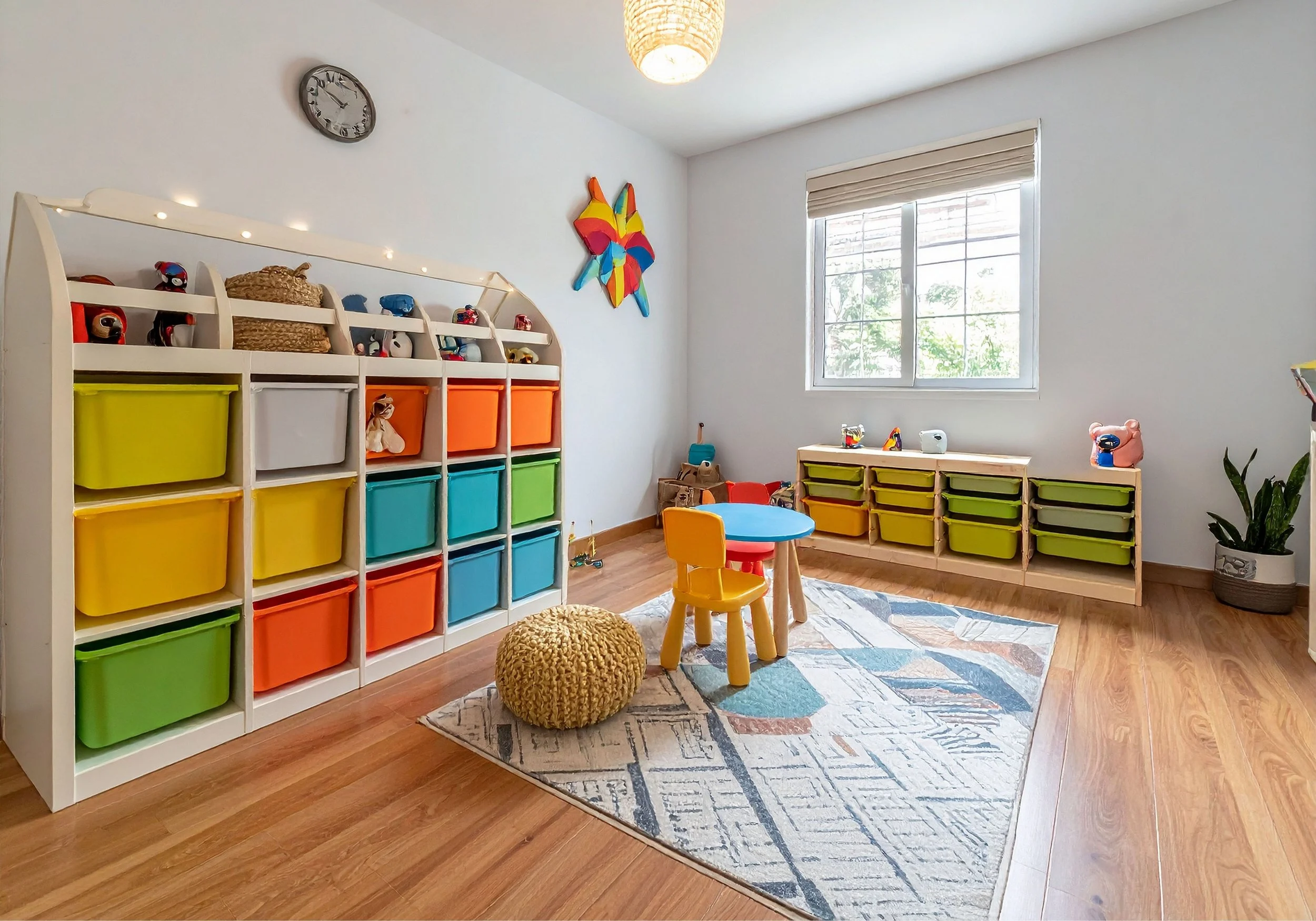
The key is to combine concealed storage with open access. Children need to see and reach the toys they use regularly, while parents need a way to hide visual clutter when the room is not in use.
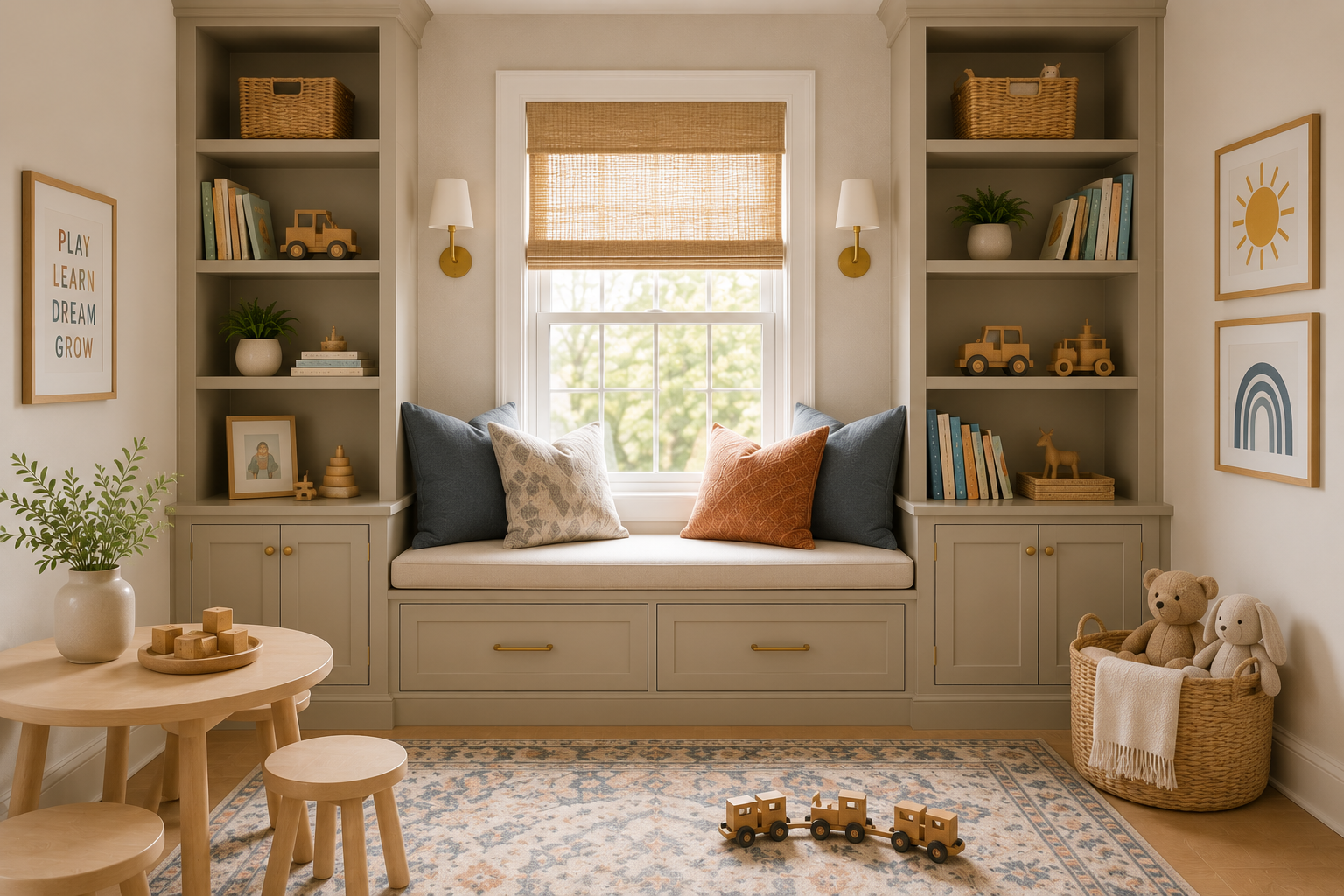
Built-in cabinetry creates a polished, architectural look. Lower cabinets can hold baskets and large toys. Drawers can organize puzzles, games and art materials. Upper cabinets can store items that require supervision, seasonal toys or keepsakes.
Window seats with storage beneath them provide seating and organization in one feature.
Ottoman benches can hold stuffed animals.
Storage stairs can support a loft or playhouse.
Wall-to-wall cabinetry can frame a television, reading nook or art station.
Avoid filling every shelf with toys. Leaving some breathing room makes the space feel calmer and gives children fewer choices at one time. Store a portion of the toys elsewhere and rotate them periodically. Older toys often feel new again when they reappear after a few weeks.
Luxury detail: Use inset cabinetry, decorative hardware, woven baskets and interior drawer dividers.
Practical parent tip: Label bins with both words and pictures so younger children can participate in cleanup.
Creating a dream playroom in a new home?
Let A Better Tripp handle the move, so your family can focus on settling in.
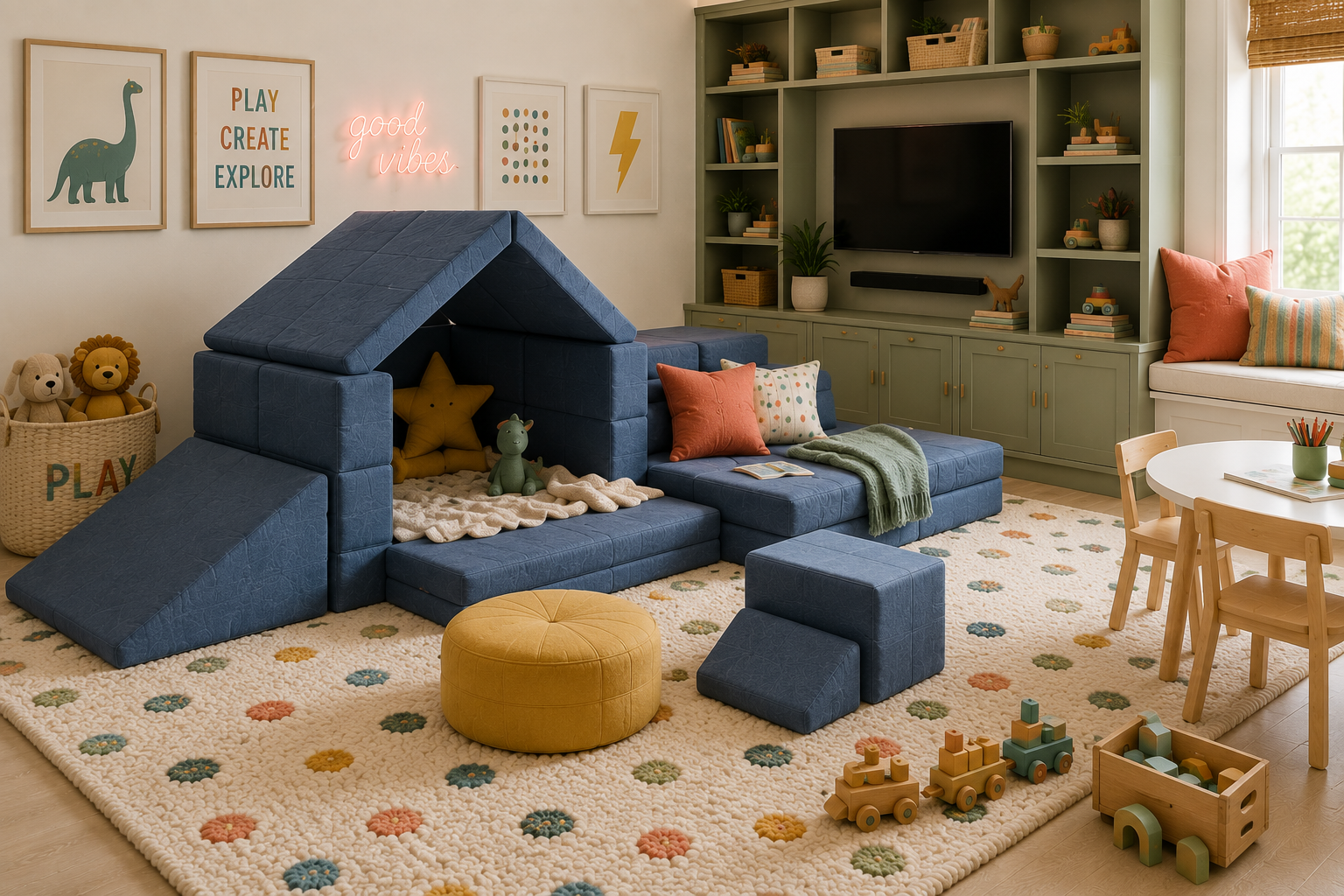
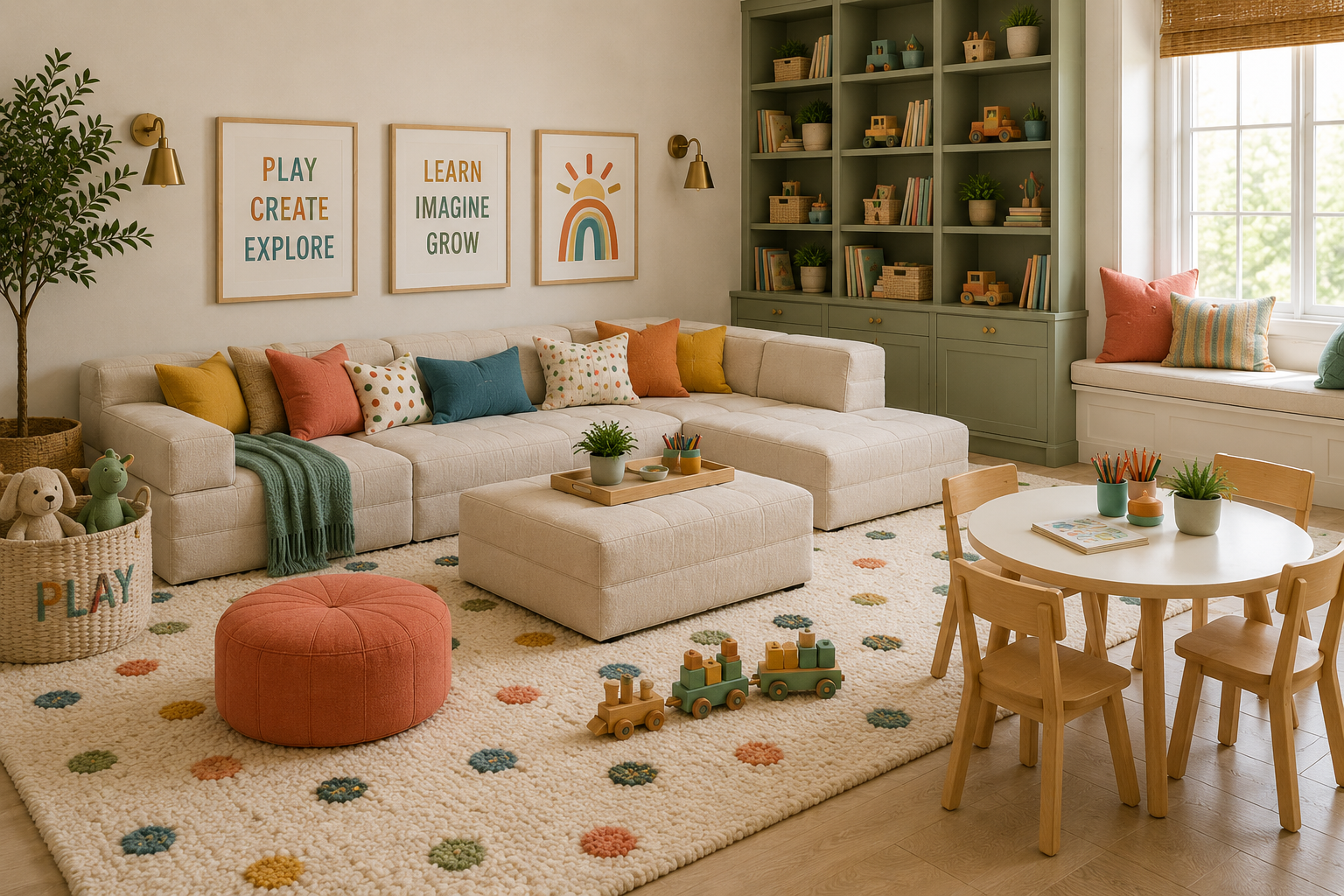
Choose Modular Furniture That Grows With Your Family
Children’s needs change quickly. The perfect room for a three-year-old may not work for an eight-year-old, and a room designed entirely around preschool toys may become obsolete sooner than expected.
Modular furniture helps the space evolve.
Use movable ottomans, nesting tables, stackable floor cushions and sectional pieces that can be rearranged. A modular play sofa can become seating, a fort, obstacle course, reading lounge or sleepover zone. Adjustable shelving can accommodate larger toys now and books or electronics later.
Select a few pieces that feel substantial and timeless rather than filling the room with small, temporary furniture. A quality table, durable sofa and well-built cabinetry can serve the family for years.
The room should also allow for activities that have not yet appeared.
Today’s play kitchen area may later become a gaming station.
The art table may become a homework desk. The costume closet may become sports-equipment storage.
Designing for flexibility is one of the smartest forms of luxury because it prevents the room from requiring a full redesign every few years.
Luxury detail: Choose performance fabrics, solid wood furniture and custom pieces with removable or adjustable components.
Practical parent tip: Keep the major furnishings neutral and use pillows, art and accessories to reflect each stage of childhood.
Give the Room a Distinctive Design Story
The most memorable playrooms have a point of view.
That does not mean the room must be covered in cartoon characters or committed to one specific theme. In fact, a subtle design story often feels more elevated and lasts longer.
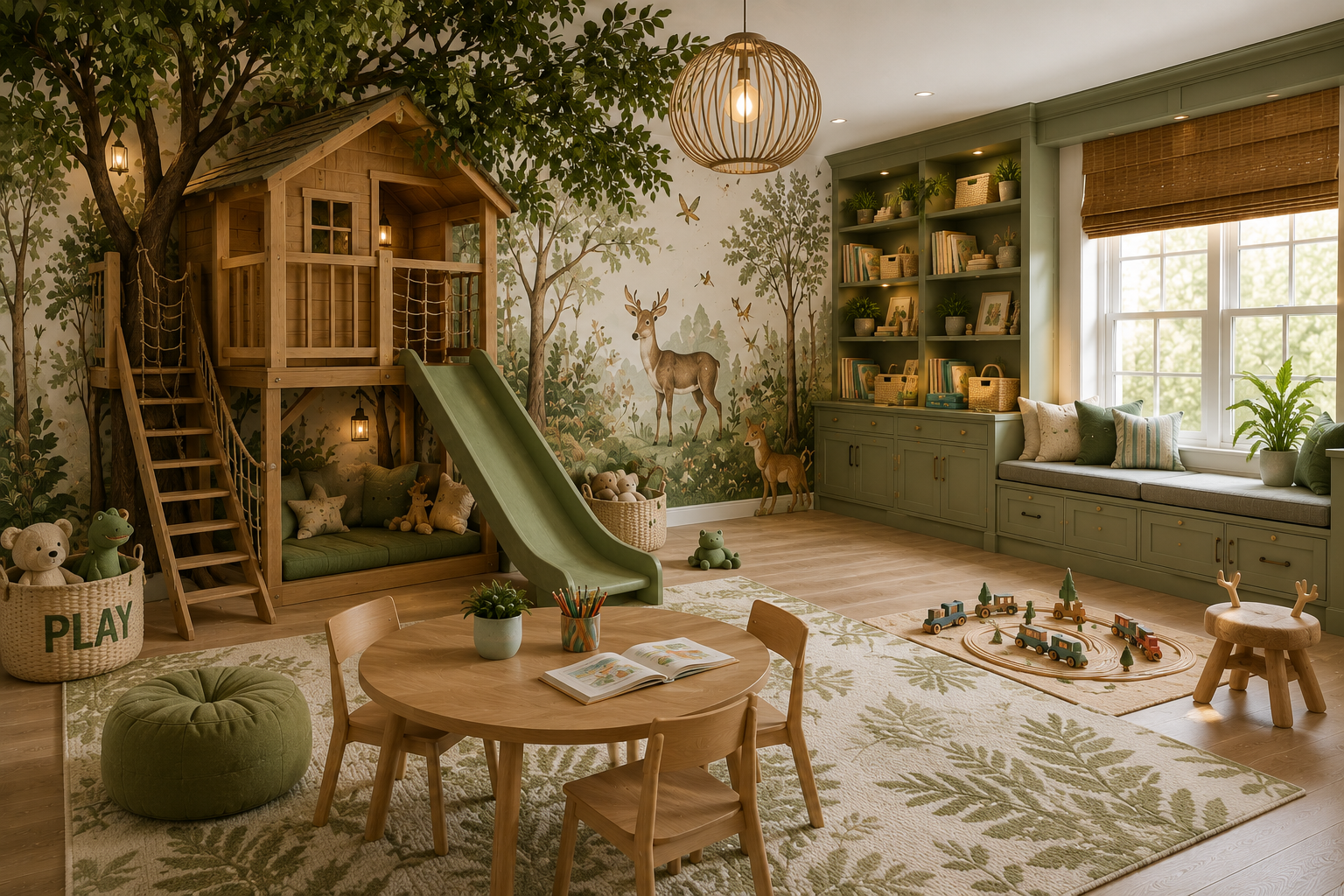
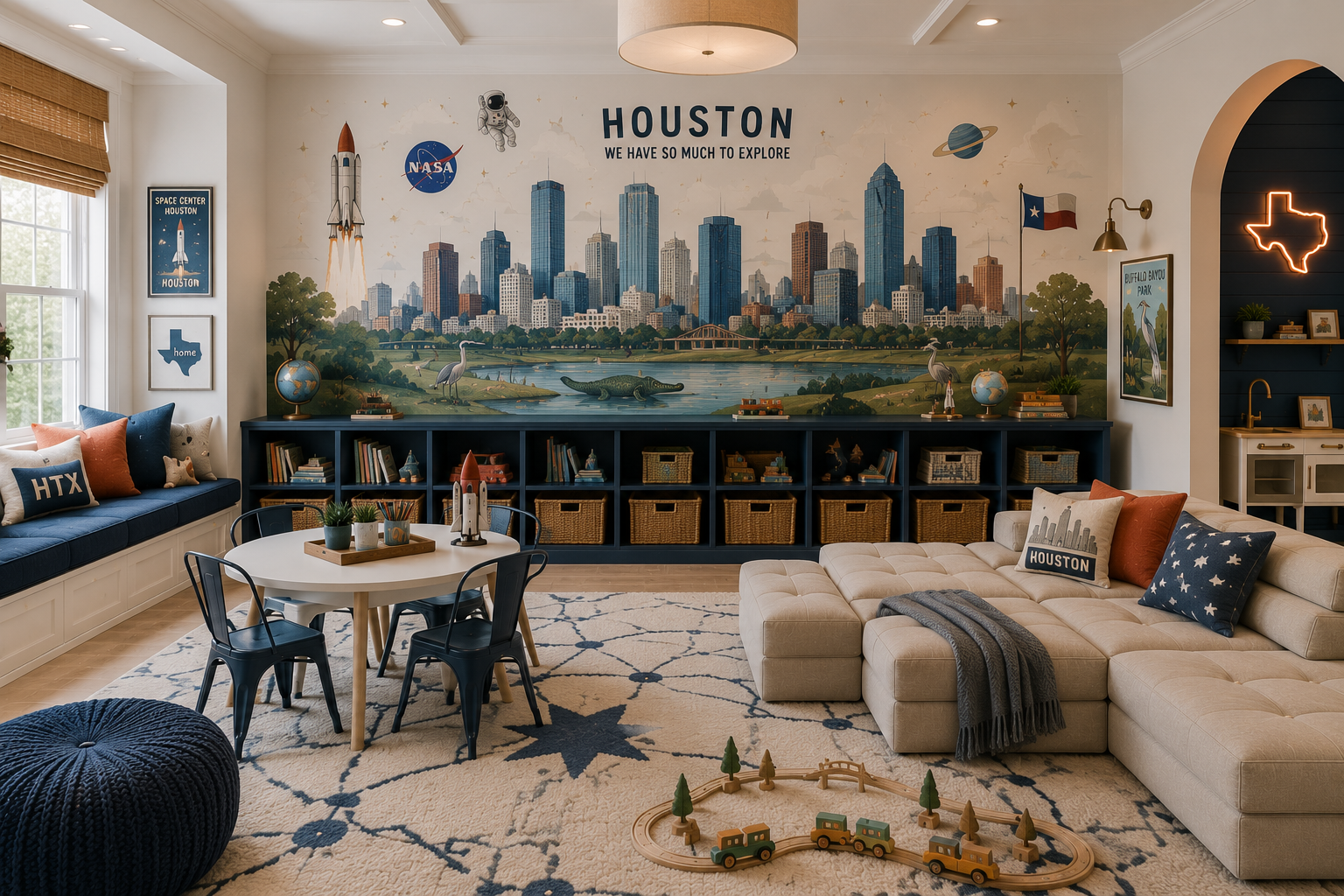
A nature-inspired playroom might include botanical wallpaper, wood tones, animal artwork and a treehouse-style loft. A space-themed room could feature a deep blue ceiling, star lighting and modern metallic accents. A Houston-inspired playroom might incorporate skyline illustrations, NASA references, bayou wildlife or artwork celebrating the city’s diverse neighborhoods.
Other possibilities include a European café, coastal retreat, modern safari, whimsical garden, art gallery, vintage schoolhouse or storybook library.
Choose one or two strong visual elements and allow the rest of the room to support them. Wallpaper on the ceiling, a dramatic mural, custom millwork or an oversized light fixture can create impact without overwhelming the space.
Personal elements make the room feel complete.
Display children’s artwork in coordinated frames.
Add their names discreetly to storage baskets or hooks.
Include family photographs, handmade pieces and favorite books.
A luxury playroom should still feel like it belongs to the children who use it.
Luxury detail:Work with a local artist, muralist, carpenter or interior designer to create one unforgettable custom feature.
Practical parent tip: Avoid permanent designs based entirely on a character or trend your child may outgrow next year. Build the theme through removable accessories whenever possible.
How to Create a Luxury Playroom That Still Works in Real Life
Beautiful design is important, but a playroom must first support the way your family actually lives.
Before purchasing furniture or selecting wallpaper, observe how your children play. Do they build elaborate structures? Spend hours drawing? Perform shows? Read quietly? Move constantly? Invite friends over?
Design around those behaviors.
A child who loves art may benefit more from a generous studio table than a large playhouse. A highly active child may need open floor space more than additional seating. Siblings with different interests may need separate zones within the same room.
Think about how the room connects to the rest of the home.
A playroom near the kitchen may need attractive concealed storage, because it remains visible.
A second-floor room may require comfortable adult seating because parents will spend more time there.
A room near bedrooms may need quieter activities and softer flooring.
The best design is one your family genuinely uses.
Inspirational Tips for Creating an After-School Study Space for Kids
Choose the Location Based on the Child
Some children work best in a quiet bedroom with minimal distractions. Others need to be near the kitchen or family room, where an adult is available to answer questions and provide gentle accountability.
There is no universally perfect homework location.
Consider your child’s age, personality and level of independence. Younger children may benefit from working near a parent. Older students may need a more private area where they can concentrate for longer periods.
A study space can be created in a bedroom, playroom, upstairs landing, hallway nook, breakfast room, home office or even inside a large closet that has been thoughtfully converted.
Give Every Child a Defined Work Surface
A consistent homework location helps establish a routine.
The desk or table should offer enough room for a notebook, textbook and computer without feeling crowded. A surface that is too small can create frustration, while an oversized desk may become a gathering place for clutter.
For siblings, separate workstations can help reduce arguments and distractions. A long built-in desk with individual drawers, chairs and lighting can create a polished study wall while giving each child a defined space.
Invest in a Comfortable, Supportive Chair
Children may spend significant time reading, writing and working on computers. A chair should support good posture and fit the child’s height.
Feet should be able to rest on the floor or a footrest. The desk height should allow arms to rest comfortably without shoulders lifting.
A beautiful chair that causes discomfort will not help a child focus. Function should come before appearance, although many attractive ergonomic options are available.
Layer the Lighting
Natural light is wonderful, but homework often extends into the evening.
Use a combination of room lighting and a focused desk lamp. The light should illuminate the work surface without producing glare on a computer screen.
Adjustable lamps allow children to direct light where they need it. Warm lighting can make the room feel comfortable, while adequate brightness helps prevent eye strain.
Avoid placing the only light directly behind the child, which can create shadows across books and papers.
Keep Essential Supplies Within Reach
Searching the house for a pencil should not become the longest part of the homework routine.
Stock the study area with pencils, pens, erasers, highlighters, scissors, glue, rulers, paper, index cards and other frequently used supplies. Use drawer organizers, cups, small bins or a desktop caddy to keep everything visible and accessible.
Older students may need chargers, headphones, a calculator, sticky notes and folders.
Create a simple weekly habit of restocking supplies so children do not discover at 9:00 p.m. that the printer has no paper.
Create a Landing Zone for School Items
Backpacks, lunch bags, sports equipment and school papers need a dedicated home.
Install hooks near the study area or entryway. Add baskets for shoes, shelves for schoolbooks and trays for papers that require a parent’s attention.
A clear landing zone reduces morning stress because essential items are less likely to disappear overnight.
Give every child an individual hook, cubby or basket whenever possible.
Use a Visible Family Calendar
Children often struggle with long-term planning because due dates and activities can feel abstract.
A wall calendar, dry-erase board or digital family display helps everyone see upcoming tests, projects, practices and events. Color-coding by child or category can make the schedule easier to understand.
Encourage older children to participate in updating the calendar. Planning is a skill that develops through practice.
A weekly review can help children break larger assignments into smaller, more manageable steps.
Provide Storage for Work in Progress
Not every assignment is completed in one sitting.
Use file boxes, magazine holders, labeled drawers or vertical organizers for ongoing projects. Each subject can have its own folder or section.
For younger children, create a designated project tray where materials can remain together without taking over the desk.
Keeping unfinished work organized reduces the chance that important papers will be damaged, lost or accidentally recycled.
Minimize Visual Distractions
A study space does not need to be bare, but too much visual activity can make concentration difficult.
Keep the immediate desk area relatively calm. Limit toys, televisions and unrelated electronics. Choose a restrained color palette and avoid covering every surface with décor.
Inspirational artwork, a family photograph or a few meaningful objects can make the space feel personal without becoming distracting.
For children who are easily distracted by movement or noise, consider positioning the desk toward a wall rather than facing the center of the room.
Create a Home for Technology
Laptops, tablets, headphones and chargers can quickly create clutter.
Add a charging drawer, cable clips or a small docking station. Label cords so family members can identify them easily. Keep devices in a consistent location overnight.
Discuss expectations for technology during homework. Some children may need website blockers, app limits or a phone-free study period to maintain focus.
Technology can be an excellent learning tool, but it should support the work rather than quietly replace it.
Include a Comfortable Reading Area
Not all schoolwork happens at a desk.
A nearby chair, window seat or floor cushion gives children a more comfortable place to read. Changing positions can also help students reset when they feel restless.
Keep reading materials, a small blanket and a lamp nearby. A comfortable reading area can make required reading feel less like a task and more like a quiet part of the evening.
Add a Brain-Break Zone
Children often need brief movement breaks, especially after sitting in school for much of the day.
A small open area for stretching, jumping, balancing or walking can help release energy. Even a basket containing a stress ball, resistance band or sensory tool may be useful.
The goal is not to interrupt homework constantly. It is to recognize that short, intentional breaks can help children return to their work with greater focus.
Establish an After-School Reset Routine
Many children cannot move directly from the school bus to a math worksheet and immediately perform at their best.
Create a predictable transition. It might include a snack, 20 minutes of free time, outdoor movement or a brief conversation about the day.
Then begin homework at a consistent time.
A routine reduces daily negotiations because everyone knows what happens next. The study space becomes part of that rhythm rather than a place associated only with stress.
Keep Healthy Snacks Nearby, but Not on the Desk
After-school hunger can derail even the most carefully designed routine.
Prepare easy snacks such as fruit, cheese, yogurt, nuts, vegetables, crackers or protein-rich options based on your family’s preferences and dietary needs.
Allow children to eat before beginning their work or create a designated snack area nearby. Keeping sticky, crumb-filled foods away from books and electronics can protect the study space.
Display Encouragement, Not Pressure
A study space should communicate that learning is valued, but it should not feel like a performance center.
Add encouraging notes, meaningful quotes, examples of improvement and selected pieces of work your child feels proud of. Celebrate effort, consistency and growth rather than only perfect grades.
Children are more likely to use a space when it feels supportive and genuinely belongs to them.
Let the Study Space Evolve
Academic needs change.
An elementary student may need crayons, handwriting paper and a parent nearby. A middle-school student may need subject files and a larger calendar. A high-school student may require a computer monitor, charging station and quieter environment.
Review the study area at the beginning of each school year. Remove supplies that are no longer needed, adjust the chair and desk height, update the calendar system and ask your child what would make the space function better.
Giving children a voice in the process can increase their sense of ownership.
From Moving In to Truly Settling In
A new home becomes meaningful gradually.
It happens when the boxes are unpacked, the children choose their rooms, the family finds its routines and every space begins to reflect the people who live there.
A thoughtfully designed playroom gives children a place to imagine and explore.
A well-organized study space supports their learning and independence.
Together, these rooms can make everyday family life feel calmer, easier and more enjoyable.
At A Better Tripp Moving & Storage, we understand that moving is not simply about transporting furniture from one address to another. It is about helping families begin the next chapter of their lives.
Whether you are moving into a larger home with room for a dream playroom, relocating across Houston or preparing for a long-distance move, our experienced team can help make the transition smoother from the first carefully packed box to the final piece of furniture placed in its new space.
The best part of moving is not simply arriving. It is creating a home where your family can thrive.
Planning Your Family’s Next Move? Request a Moving Quote.
Bonus: Back-to-School Moving Checklist
✔ Notify your child's current school.
✔ Transfer school records.
✔ Update your address with the school district.
✔ Pack school essentials separately.
✔ Confirm bus transportation (if applicable).
✔ Set up internet before moving day.
✔ Assemble desks and homework areas first.
✔ Locate nearby grocery stores and pharmacies.
✔ Practice the school commute.
✔ Celebrate your family's fresh start with a fun first-night dinner in your new home.
Better Tip of the Month
Moving during back-to-school season doesn't have to be stressful. With a little planning (and the right moving team) you can spend less time unpacking and more time helping your family settle into a successful new school year.
BETTER BLOG FAQ’s
What should every children’s playroom include?
A functional playroom should include open floor space, accessible toy storage, comfortable seating, age-appropriate activity zones and durable, easy-to-clean materials. Reading, art and imaginative-play areas can make the room more versatile.
How can I make a playroom look luxurious?
Use custom cabinetry, coordinated storage, quality lighting, architectural details, performance fabrics and a cohesive color palette. One distinctive feature, such as a mural, indoor loft or built-in reading nook, can give the room a custom appearance.
How do I keep a playroom organized?
Combine open baskets for everyday toys with concealed cabinets for visual clutter. Label storage, limit the number of toys displayed at once and rotate toys periodically.
How can a playroom grow with my child?
Choose modular furniture, adjustable shelving, neutral foundational pieces and flexible activity zones. A play table can eventually become a homework desk, while a reading nook can transition into a teen lounge.
Where should I create a homework space?
Choose a location based on the child’s age and ability to work independently. Younger children may need a desk near the kitchen or family room, while older students may benefit from a quieter bedroom or office space.
What should a children’s study space include?
Include a supportive chair, adequate lighting, organized school supplies, charging access, project storage, a calendar and a comfortable reading area.
From A Better Tripp:
At A Better Tripp Moving & Storage, we specialize in long-distance, white-glove relocations (including city homes, apartments, country homes, and destination homes across the U.S).
We understand:
Climate-sensitive packing
Seasonal access challenges
High-value homes and specialty items
Flexible delivery timing
If you’ve just moved into your new home, A Better Tripp Moving & Storage can help you go from unpacked to unforgettable fast.
Our white-glove moving and setup services make it easy to focus on what matters most.
When you’re ready to make a move, A Better Tripp is here to guide you…every mile, every season.
Move into your family’s next chapter with experienced
Houston movers who understand the care behind every belonging.
luxury playroom ideas | Creative playroom ideas | Kids’ playroom design | Luxury kids’ room ideas | Modern playroom ideas | Playroom organization ideas | Custom playroom design | Kids’ activity room ideas | Elegant playroom ideas | Playroom storage solutions | Playroom ideas for a new home | Kids’ homework space ideas | After-school study space | Children’s study room ideas | Family home organization | Moving into a family home | Creative luxury playroom ideas for kids | How to design a high-end playroom | Luxury playroom ideas that grow with children | Beautiful playroom storage ideas | Custom playroom ideas for a new home | How to organize a children’s playroom | Playroom ideas for active children | Playroom and homework room combination ideas | How to create an after-school study space | Homework station ideas for multiple children | Study nook ideas for small spaces | Family-friendly home design after moving | How to set up a child’s room after moving | Playroom ideas for Houston families | Luxury playroom with custom storage and creative activity zones | Modern children’s playroom with an indoor playhouse | Creative art station inside a luxury kids’ playroom | Built-in reading nook for children | Organized homework and study space for kids | Custom playroom cabinetry in a family home | Indoor movement zone for active children | Playroom designed for creative and imaginative play